
In Missoula, food donations matter more when 24,440 people can shop instead of line up.
Missoula Food Bank & Community Center is compelling because it treats hunger relief like a matter of dignity, not crowd control. The free choice-model Store, kid meal programs, and food-rescue system make this the Missoula donation answer I’d give a friend.
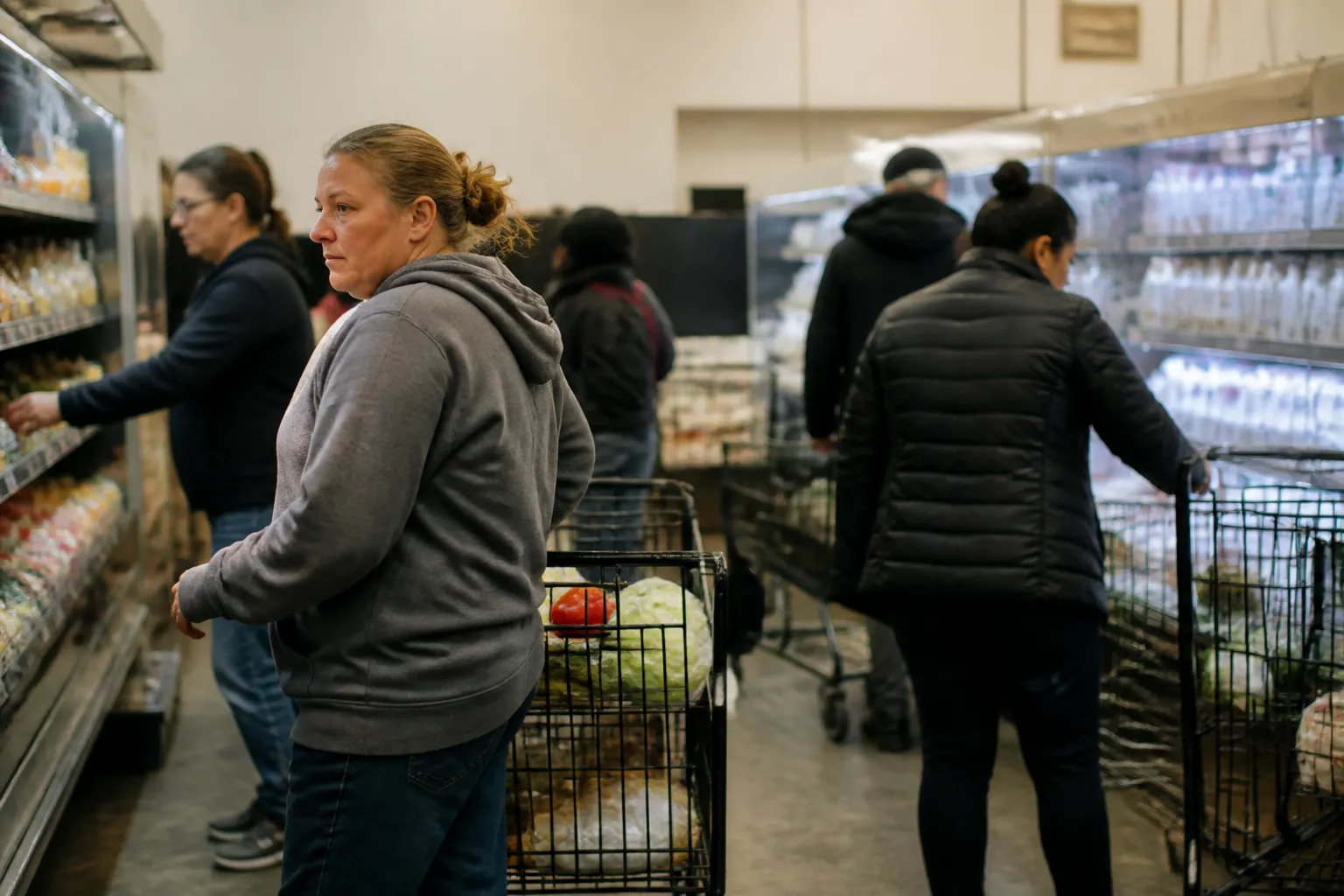
The soft squeak of a cart wheel is doing a lot of work in Missoula.
Inside the free Store at Missoula Food Bank & Community Center, the important motion is a shopper choosing what actually fits their household. Pasta their kids will eat. Produce that makes sense for the week. The kind of ordinary decision most of us make without thinking — and the kind that disappears fast when hunger relief turns people into a line.
That is why this is the Missoula food bank story worth your attention. Plenty of places can accept food donations. Far fewer have built a model that treats dignity as core infrastructure. According to the organization, Missoula Food Bank & Community Center served 24,440 unduplicated individuals in FY25. Big reach is good. Big reach with choice is better.
The food world loves quantity because it is easy to measure. The food world loves quantity because it is easy to measure, from pounds rescued and meals served to shelves stocked, and all of it is necessary. But volume alone does not tell you whether the experience of asking for help feels humane or humiliating. According to the organization, there are no income or identification requirements to use it.
Missoula Food Bank & Community Center has an answer to that problem, and it starts right at the entrance: anyone who needs help can visit the free Store, complete a short intake form, meet with a trained Resource Assistant, and shop based on household size.
That detail is the whole argument.
“We envision a community that embraces food justice where no one feels shame or experiences stigma when asking for help.” — Missoula Food Bank & Community Center
The best idea here is also the simplest: let people choose
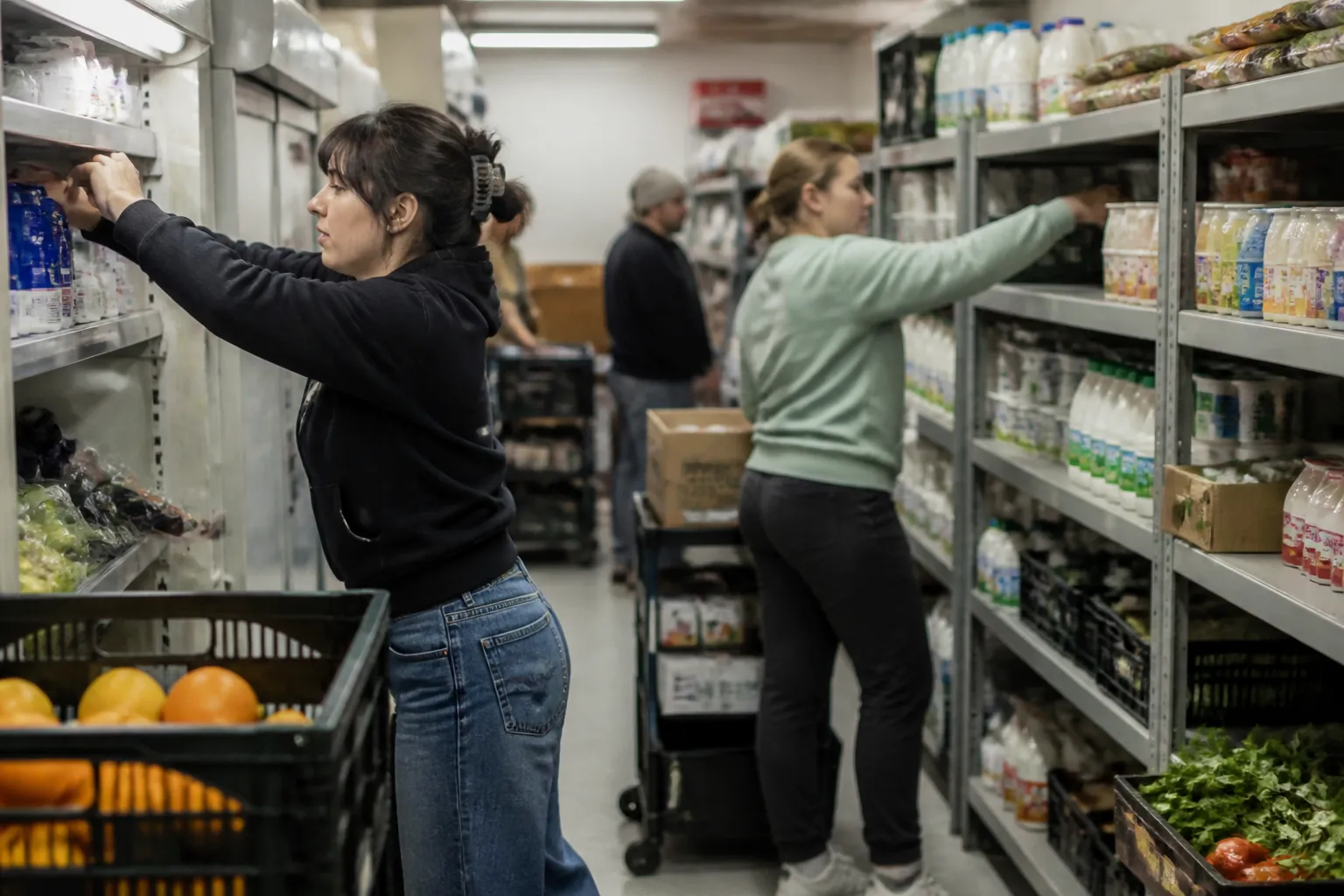
A choice-model store sounds almost too modest to be radical, until you remember how often hunger relief still operates like crowd control. A shopper can take the bag, accept the assortment, and make it work. Missoula Food Bank & Community Center is smarter than that. It assumes the person in front of the shelf knows more about their household than any preselected bundle ever could.
And the Store is not just a nice front-end experience hiding a messy back room. The back room is where the organization gets especially sharp. Grocery Rescue collects food from local grocery stores that would otherwise be discarded, then sorts it to stock the Store shelves. Food Circle accepts prepared, perishable food from commercial food establishments and repackages it into single-serving meals. Edible food stays on shelves instead of being thrown out, and people leave with groceries they can actually use.
For donors, that matters. When you are deciding where to donate food in Missoula, you are really deciding what kind of experience your donation creates on the other side. Here, a jar of peanut butter or a cash gift helps stock a warehouse designed so someone can walk out with groceries they chose for themselves.
The place earned that perspective the long way. Missoula Food Bank & Community Center was founded in 1982, growing out of a group of Missoulians informally called People Ending Hunger who came together during a period of food insecurity and economic recession. It started in a basement, moved through several homes, and eventually grew into a community center with EmPower Place and a hands-on learning kitchen. That arc matters because you can still feel the basement logic inside the bigger institution: practical, neighbor-built, uninterested in making people jump through theatrical hoops.
The real strength is everything that happens after the shelf
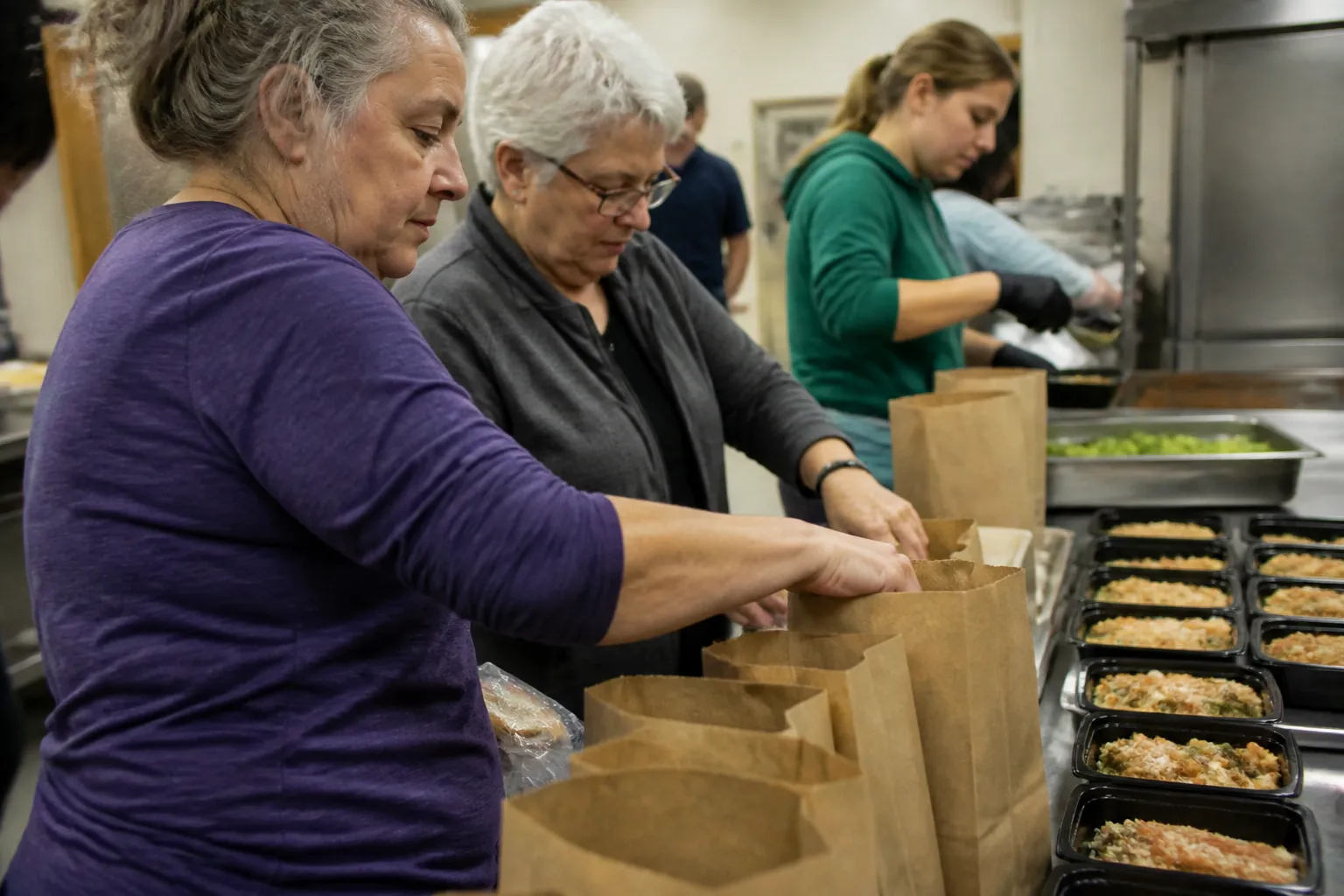
The strongest donor case for this organization is that the Store is the front door to everything that follows.
On Friday afternoon, a student can head home with an EmPower Pack tucked into a backpack, and Missoula Food Bank & Community Center says 41,524 of those packs went home last school year. Last year, 5,104 local families visited EmPower Place, which is where this work lands when a school week, a family budget, and a weekend all meet at once.
That is also why the organization’s elder and homebound programs feel so important. ROOTS provides monthly grocery delivery or pickup for income-qualifying people age 60 or older, with home delivery for people with mobility or transportation barriers. Fresh Food Box offers monthly grocery delivery for people who are homebound or facing transportation or mobility barriers. Those programs extend access to people who cannot easily reach a store.
Get the weekly digest
New stories, new nonprofits, every Tuesday morning.
It is worth saying plainly: a lot of charitable giving still gets seduced by the dramatic moment — holiday collections, big bins, feel-good photo ops. Missoula Food Bank & Community Center does the less glamorous thing, which is better. It builds routines. A student gets a weekend pack before Friday becomes a problem. Without turning transportation into a second crisis, a senior gets groceries. At EmPower Place, a family finds a center built around repetition, not rescue fantasy.
You can see Missoula respond to that seriousness. According to the organization, its annual Holiday Drive raised $325,000, and in 2024 it kicked off its 38th edition. That is the kind of local trust that only accumulates when people know the institution will still matter in February, in April, in the months when generosity is less performative and hunger is just as real.
Dignity counts more when people with lived experience are in the room

Here is the part that kept me from filing this away as “good food bank, moving on.” The organization does not only feed people. It makes room for people closest to the issue to shape how the place understands itself.
Its LEVL program is a vivid example. According to the organization, the 2025-2026 LEVL cohort met weekly for five months to explore storytelling through writing, art, and podcasting, and participants were invited to share their experiences with the broader community. On a spreadsheet, that may look adjacent to hunger relief. In real life, it is central to it. If you want a food bank to reduce shame, then people who know shame from the inside should not be treated as decorative testimonials. They should be part of how the organization learns.
Amber Stewart, a LEVL co-facilitator, experienced food insecurity as a child before earning a degree in communication studies and nonprofit leadership. Her line is exactly the kind of sentence I trust because it contains no self-congratulation at all: “Do the best you can until you know better. Then when you know better, do better.”
That spirit shows up elsewhere too. In 2024, Missoula Food Bank & Community Center completed an equity audit with Widerstand Consulting to evaluate progress and identify areas for improvement. Good. A place that says “You are welcome here” should be willing to check whether that welcome is actually being felt.
The work brings together advocacy, volunteerism, and healthy food through a Store that lets people choose, a kitchen that repackages rescued meals, and deliveries that go to elders and homebound neighbors. This is what it looks like when food justice stops being a slogan and starts behaving like infrastructure.
Where to donate food in Missoula, MT when dignity matters

So yes, this is the answer I would give a friend asking where their Missoula food donation will matter most.
It served 24,440 unduplicated individuals in FY25. The reason is simpler: Missoula Food Bank & Community Center seems to understand that hunger relief works when help feels usable, welcoming, and built for the life someone is actually living.
The Store lets people choose groceries that fit their households, and the organization also delivers weekend EmPower Packs, senior groceries, and repacked meals.
The organization’s current needs are admirably concrete. It is seeking food donations for the Store, monetary donations for weekend EmPower Packs, and volunteers for store boxing, kitchen repacking, food deliveries, and assembling ROOTS boxes. It also lists 35 staff and 1,797 volunteers, and according to its IRS financials reported $7.1 million in revenue, $7.4 million in expenses, and $10.1 million in assets. In other words: this is a real community institution with enough infrastructure to do the job and enough local texture to remember why the job should be done this way.
The smartest charitable giving is not always the flashiest. Sometimes it is a shelf stocked with food someone recognizes, a repacked meal that does not go to waste, a delivery box that reaches an elder who cannot easily get across town. Sometimes it is the difference between being handed something and being invited to choose.
For food donations, bring them to the Store at Missoula Food Bank & Community Center; the organization is also seeking monetary donations for weekend EmPower Packs and volunteers for store boxing, kitchen repacking, food deliveries, and assembling ROOTS boxes.
Frequently asked questions
- Where can I donate food in Missoula?
- Missoula Food Bank & Community Center accepts food donations for its Store. The organization also seeks monetary donations for weekend EmPower Packs and volunteers for store boxing, kitchen repacking, food deliveries, and assembling ROOTS boxes.
- How does the Store work at Missoula Food Bank & Community Center?
- It is a free choice-model food access program. Visitors complete a short intake form, meet with a trained Resource Assistant, and shop for groceries based on household size.
- Do I need income verification or ID to use the Store?
- According to Missoula Food Bank & Community Center, no income or identification is required to shop in the free Store.
- Does Missoula Food Bank & Community Center only offer pantry groceries?
- No. It also runs Grocery Rescue and Food Circle, sends weekend EmPower Packs home with students, prepares school-year meals, and offers ROOTS and Fresh Food Box grocery deliveries.
- How many people does Missoula Food Bank & Community Center serve?
- According to the organization, it served 24,440 unduplicated individuals in FY25 in Missoula County.
- missoulafoodbank.org ↗
- Missoula Food Bank & Community Center operates a free choice-model food store where shoppers select the groceries they need, without an income or identification barrier at the door.
- The organization’s stated mission is to end hunger through advocacy, volunteerism, and healthy food access, and to nourish the community.
- Missoula Food Bank & Community Center began in 1982 after Missoulians associated with People Ending Hunger organized to address local hunger.
- The organization completed an equity audit with Widerstand Consulting in 2024.
- Its annual Holiday Drive raised $325,000, according to the organization’s platform-verified recent-news record.
- missoulafoodbank.org ↗
- “This is what it means to nourish community.” — Missoula Food Bank & Community Center