
Most senior support in Missoula looks ordinary on purpose. These 2 nonprofits keep it that way.
The best elder-support nonprofits in Missoula are not chasing novelty. Missoula Senior Citizens Center and Missoula Manor Homes provide reliable support that makes aging feel ordinary on purpose.
Kathleen Walford was not trying to sell Missoula on a grand theory in 1966. She was sitting with the Missoula Human Resource Council, trying to describe something much more useful: a place an older person could walk into without ceremony, sit down, and be among other people. Her language still feels startlingly right because it is so plain. Good elder support is often dressed up as inspiration. The real thing looks more like a lunch table, a bingo card, a quiet apartment, a front desk that knows your name, and a building steady enough for tomorrow to feel normal.
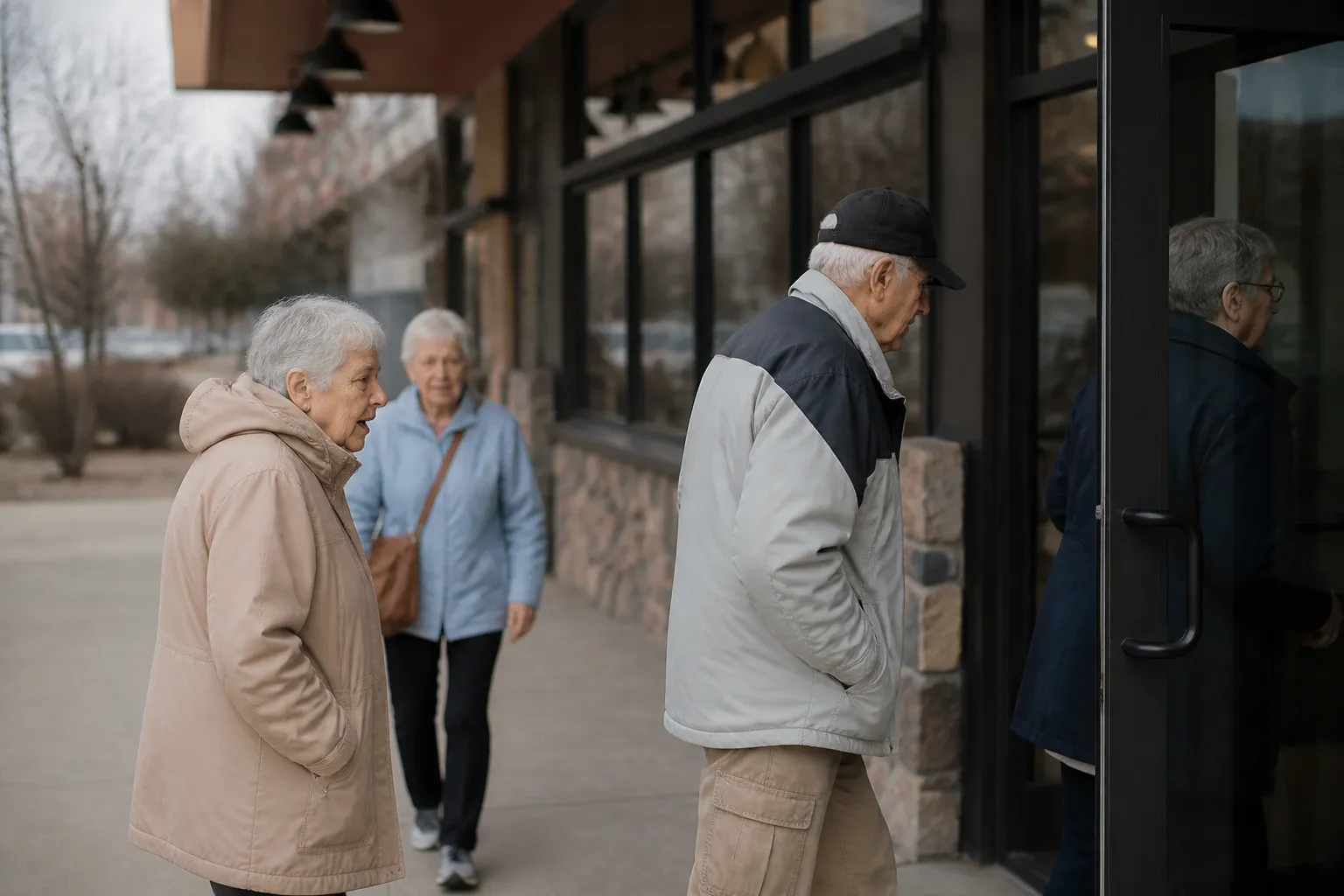
The problem with a lot of public talk about aging is that it goes syrupy almost immediately. Everything turns into uplift, or crisis, or both. But Most people need places designed so small routines can keep happening every day. A lunch downtown can anchor a routine, while a nearby building keeps help close without treating independence like a relic.
That is why Missoula Senior Citizens Center and Missoula Manor Homes make such a convincing pair. One is a downtown hub built around daily meals, Thursday night bingo and classes, plus the kind of thrift-shop browsing that turns an errand into social life. The other is a six-story independent-living community for adults 62 and older where housing comes bundled with lunch, dinner, service coordination, and wellness support. Between them, you get a much sharper picture of what supporting older adults in Missoula actually means: not a one-time rescue, but the repetitive, ordinary infrastructure that keeps isolation from hardening into crisis.
Where to donate to senior services in Missoula, MT
Walford's original dream did not ask for much, which is exactly why it asked for something huge..
A year after that 1966 meeting, the State Council on Aging approved the project. Volunteers and donations helped turn the Victoria Hotel at 424 North Higgins into a senior center, and the organization was founded in 1970. Since 1976, it has been active in its current location on Higgins. That history matters because the center is not performing the idea of community; it has been practicing it, in public, for decades.
Today the place is blessedly concrete. Daily lunch service anchors the place, with Bingo every Thursday night and a Bingo Café open before the game. The Underground Thrift Shop, card and checkers games, and painting and art classes keep the center active through the week. Membership is open to any age, while voting members must be 50 and older, which gives the whole thing a useful porosity: this is senior support, yes, but it is also a community room where older adults and their families can keep participating in city life instead of being neatly shuffled out of it.
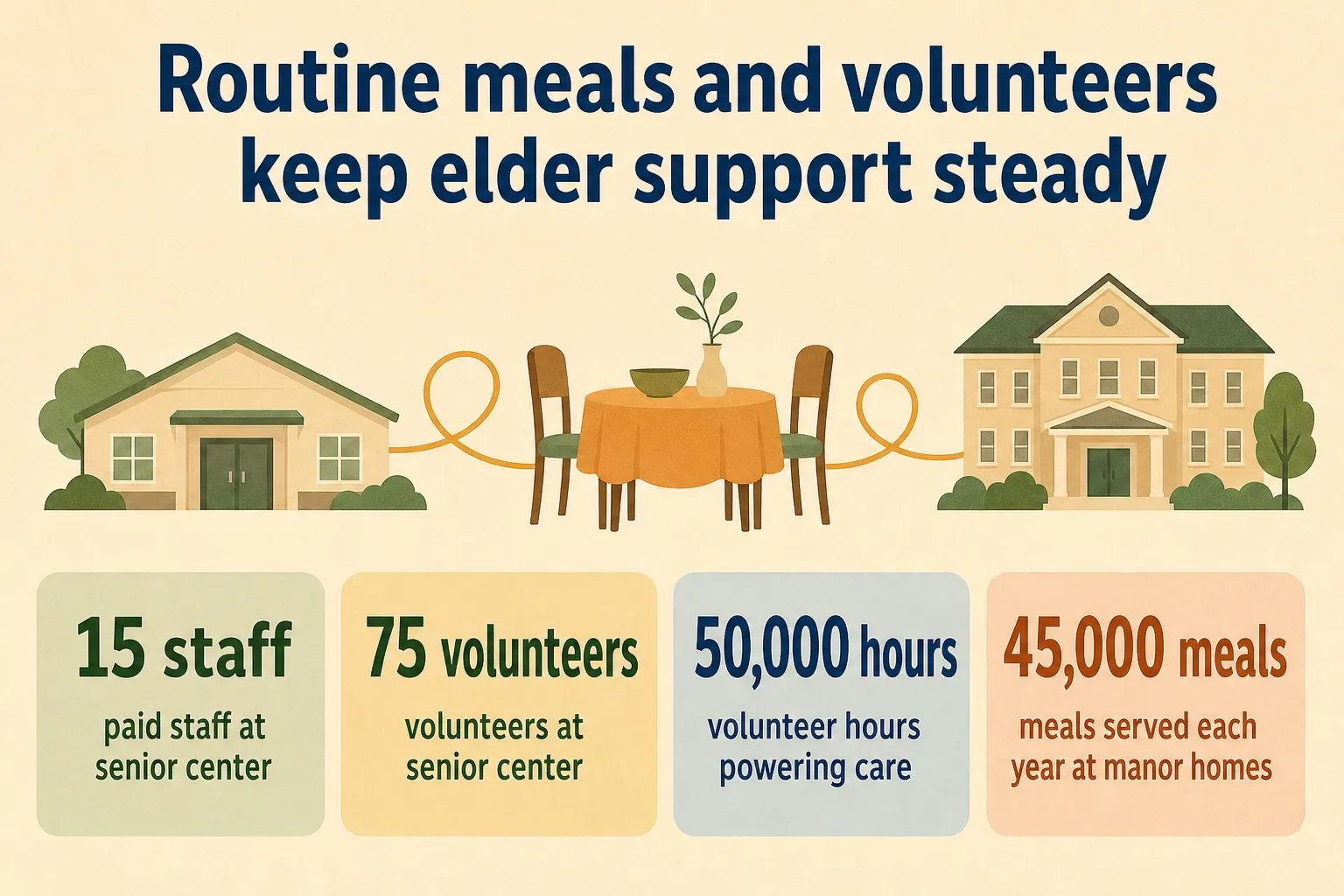
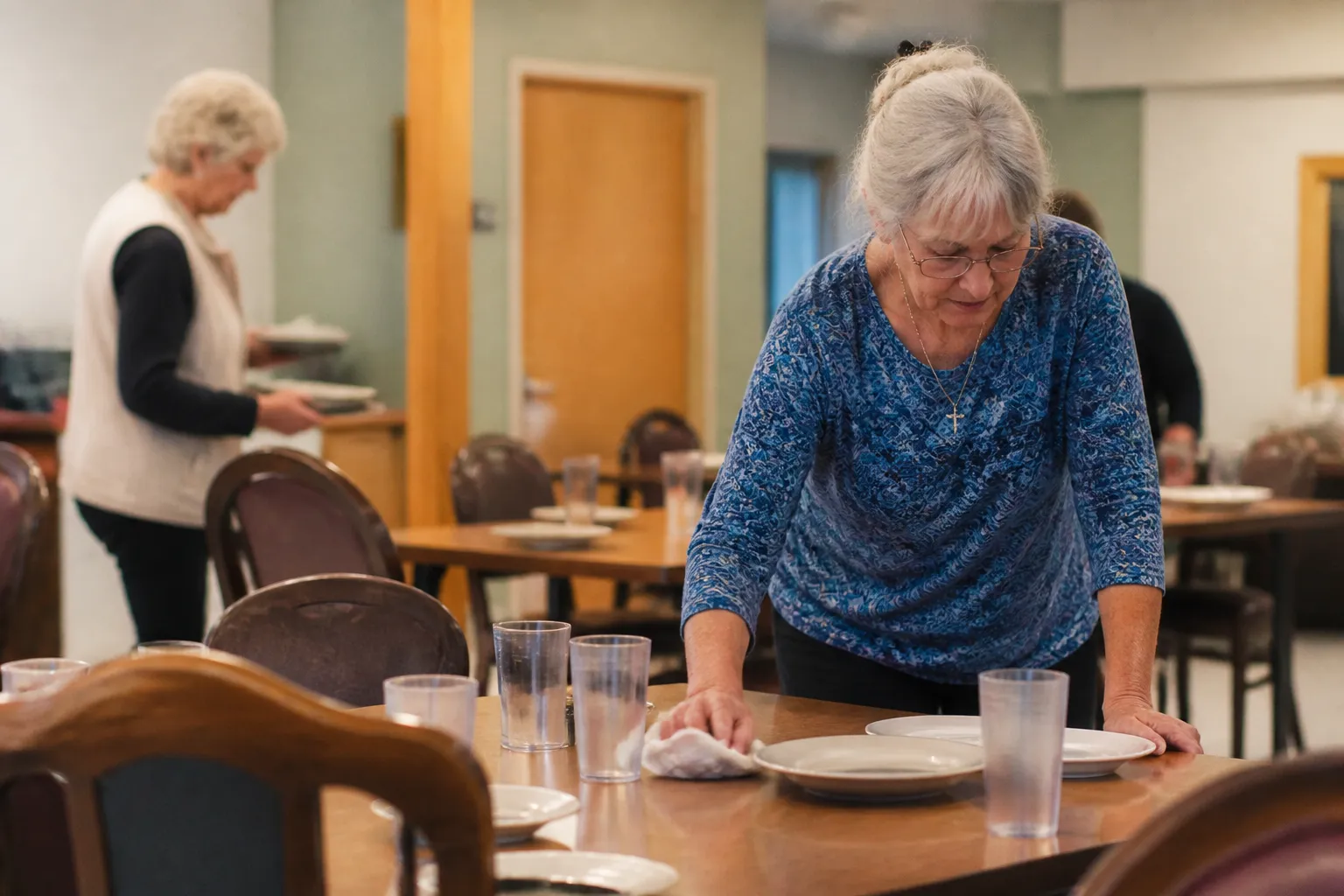
And the number that makes this feel like serious civic infrastructure is the labor behind it. Platform-verified data says Missoula Senior Citizens Center runs with 15 staff, 75 volunteers, and more than 50,000 volunteer hours. That is the engine. Lunch does not appear because an organization believes in fellowship. Somebody orders food, sets tables, serves plates, wipes down counters, sorts donations in the thrift shop, answers phones, stuffs newsletters, and unlocks the doors again tomorrow. The center even paid off its mortgage in just 2 years, a neat little fact that tells you Missoula has been underwriting this kind of ordinary stability for a long time.
Even the center's volunteer lanes tell on the model. The organization asks for help in the kitchen, thrift shop and office, with newsletter work. None of that sounds glamorous. Good. Glamour is beside the point here. What matters is that the work touches the exact places where loneliness gets interrupted and routine gets preserved.
Routine is the intervention.
A downtown gathering place is easy to underrate until you picture the alternative in practical terms. The daily lunch becomes another meal alone. Thursday bingo becomes another evening with the television talking at you. A thrift-shop browse becomes one less excuse to head downtown, one less familiar face, one less moment when somebody notices you made it in today. The center's mission is formal about supporting seniors' physical and intellectual, along with emotional health and well-being. Fine. But the genius of the place is that it delivers those lofty nouns through humble verbs: come in, sit down, eat, play, talk, browse, stay awhile.
That is why the center deserves real donor attention. The organization says donations support a welcoming space for seniors to connect, healthy meals and food service, movement and wellness activities, and programs that keep seniors engaged and social. If you are thinking about where to put money or time around older adults in Missoula, notice how much of the center's work is built around repeat visits. The point is schedule, not spectacle.
Independence is a building, not a slogan
Gary T. moved into Missoula Manor Homes in March of 2025, and the details he chose to celebrate tell you almost everything worth knowing about the place. Gary focused on the menu and the grounds, the daily details that matter more than abstractions about aging with dignity. His quote is the opposite of marketing fluff, which is exactly why it lands:
Get the weekly digest
New stories, new nonprofits, every Tuesday morning.
"I moved in in March of 2025 and absolutely love it here! If you partake of the meal plan, the menu is varied and well prepared. The grounds are well groomed…" — Gary T., Resident
That is the voice of someone registering stability at eye level. The good food and cared-for grounds give the home its calm. For older adults, especially those trying to preserve independence without taking on the full strain of living completely alone, those details form the architecture of ease.
Missoula Manor Homes exists because local volunteers recognized that point early. The nonprofit was founded in 1969 by Missoula Aerie and Auxiliary #32 of the Fraternal Order of Eagles. According to the organization's history, members then spent three years developing the plan, securing the land, working with an architect, and supervising construction before the first residents moved in on June 14, 1972. Meals started on July 1. Again, the important nouns are ordinary: land, construction, dinner, a building that opens and keeps going. This is how a community makes independence more than a nice sentiment.
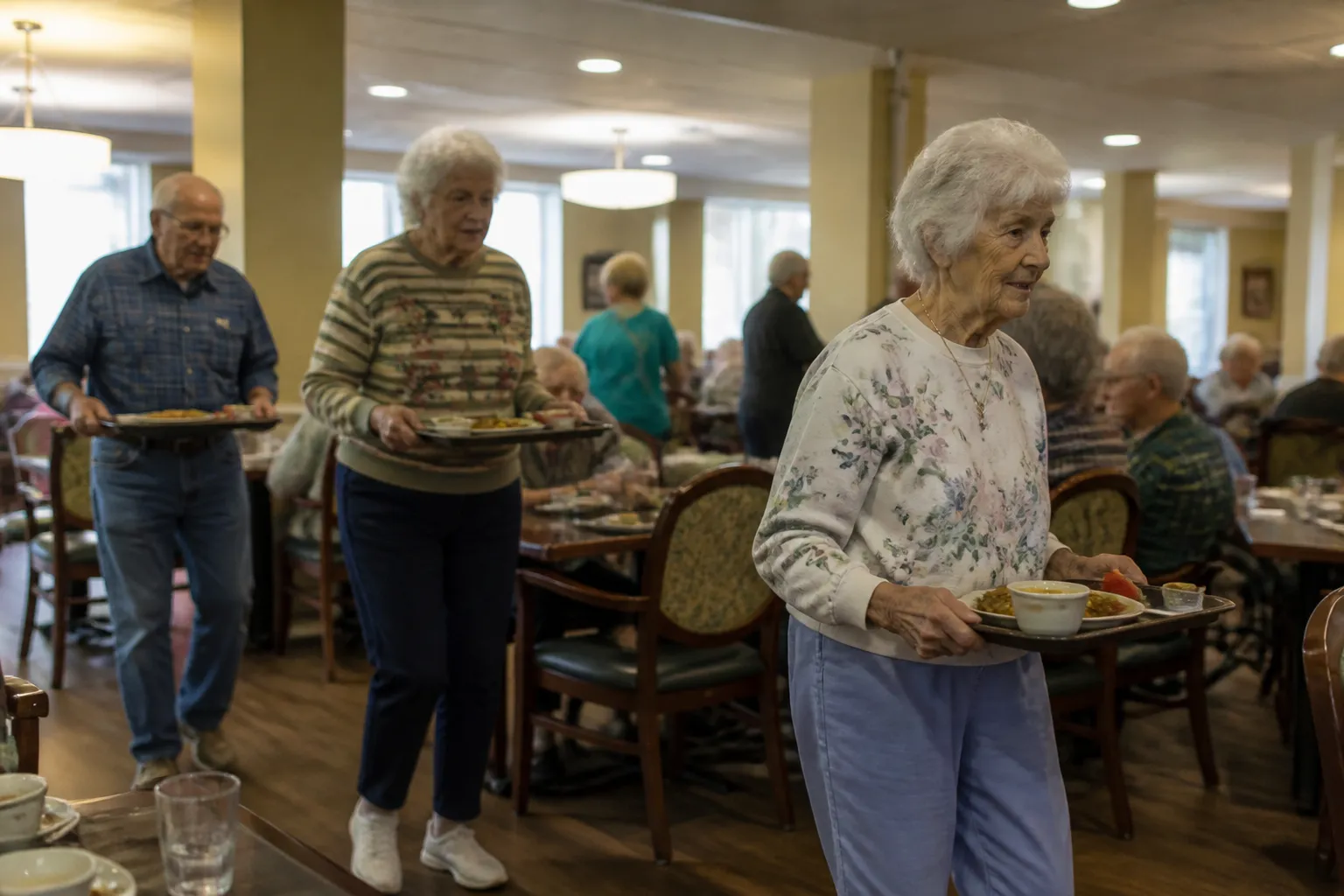
The setup today is admirably unglamorous and therefore very strong. Missoula Manor Homes is a six-story independent-living community for adults 62 and older, with 83 studio apartments and 44 one-bedroom apartments. It serves lunch and dinner to residents and other qualifying persons, and it provides service coordination and wellness support to help elderly residents obtain services, develop a wellness program, and advocate for older adults. According to the organization's reported impact, it houses approximately 126 residents and serves over 45,000 meals every year. Those are big numbers, but they point back to something intimate: a lot of people waking up in a place designed to reduce friction, not add it.
The organization also says adults 62 and older can contact the front desk by the front desk through its phone and email channels or the contact form to schedule a personal tour, and that the community accepts HUD subsidies for people earning under $60,700 per year alongside full market units. That matters because affordability is central to the model. Stable housing only counts as elder support if people can actually get through the door.
There is a temptation, when writing about housing for older adults, to get hypnotized by amenities. Missoula Manor does offer plenty of them, from a guest room and chapel to a library, exercise area, laundry, beauty shop, foot care, resident market, shuffleboard, pool table and pianos, where residents gather for activities. But the more persuasive story lives closer to the floor. The organization shares resident experiences that praise weekly housekeeping, helpful front-desk staff, and friendships formed in the building. That is what a good independent-living nonprofit understands. The point is not to stage some glossy fantasy of eternal youth. The point is to make Tuesday manageable, lunch dependable, and a move later in life feel less like a rupture.
The ordinary stuff is the whole point
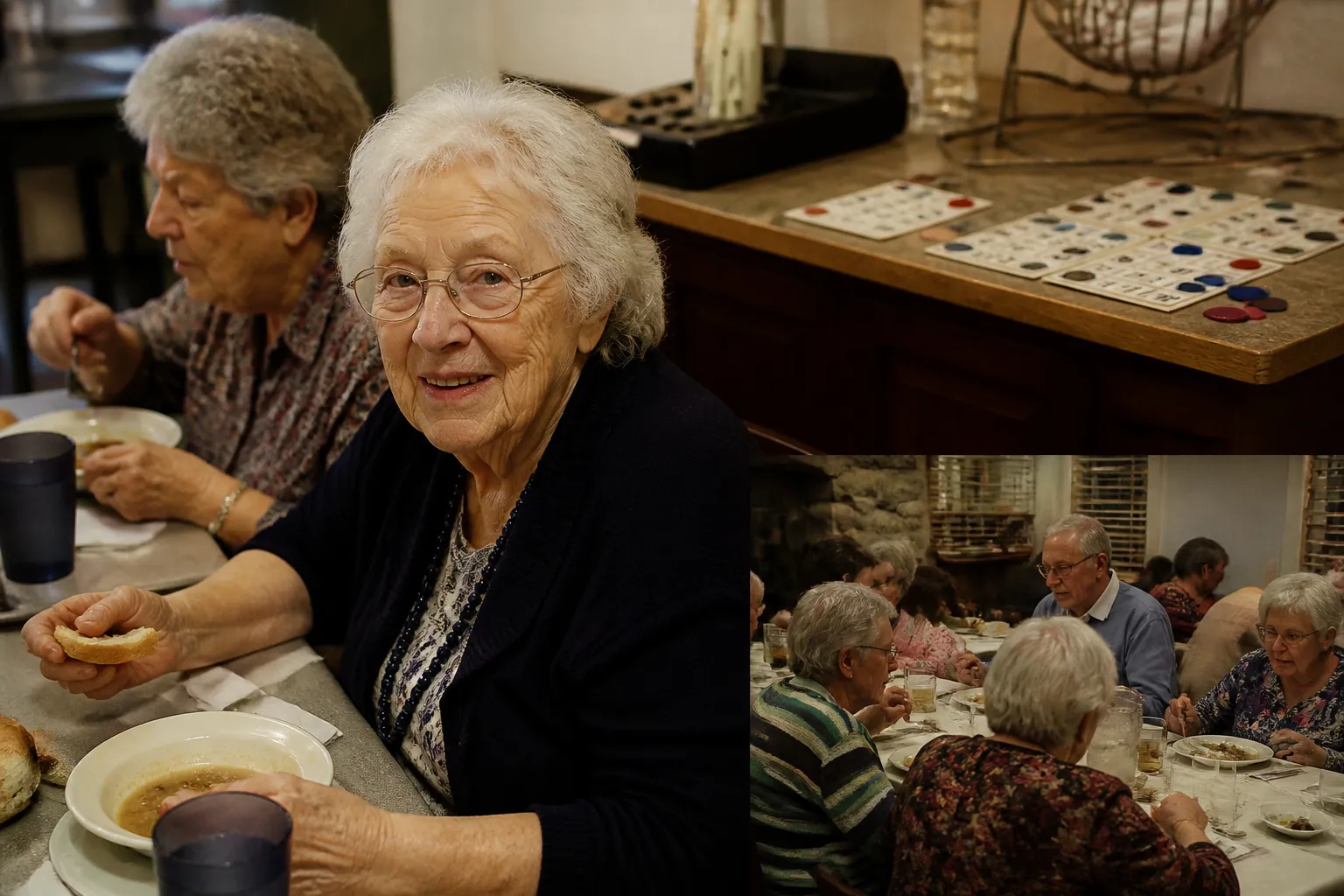
These two organizations are working different sides of the same equation. The Senior Citizens Center keeps the city porous for older adults: a place to arrive, eat, play, shop, talk and linger, with someone expecting them back expected back. Missoula Manor Homes keeps home life stable: a place to live independently while meals and support stay within reach, with daily contact built in. One has been sustained by more than 50,000 volunteer hours, according to platform-verified data. The other says it houses approximately 126 residents and serves over 45,000 meals a year. Put those facts next to each other and the broader case comes into focus.
Elder support is about whether the ordinary scaffolding holds, day after day.
That is the part many giving conversations miss. Aging support gets wrapped in cheerful clichés so fast that donors can forget what they are actually paying for. The money pays for the meal that returns tomorrow and the building staff who will still be there next month. A weekly bingo night becomes a standing appointment; a service coordinator can help before a manageable problem behaves like a disaster. If you want to donate to senior services in Missoula, MT, this is the distinction worth caring about: fund the ordinary machinery before you fund anything splashier.
Missoula is fortunate to have both a downtown gathering place and a substantial independent-living community making that case in real life. One traces back to Kathleen Walford imagining a room where people could come in off the street and have fellowship. The other traces back to local volunteers who took the long route because older adults needed a stable place to live. Neither story is trying to impress you with novelty. Good. Novelty is overrated in this category. Dependability is the flex.
So here is the cleanest action I can recommend: put your next local elder-support gift where routine lives. Help Missoula Senior Citizens Center keep lunch on the table, volunteers in the kitchen and thrift shop, and that downtown room open. Or back the housing and service coordination that make Missoula Manor Homes feel like more than an address, with meals part of the daily rhythm.
The work may look ordinary from the sidewalk. That is exactly why it matters.
Frequently asked questions
- What senior services in Missoula are strongest if I want to support everyday aging needs?
- This piece highlights two standouts. Missoula Senior Citizens Center provides daily connection through its Thursday night bingo and thrift shop. Missoula Manor Homes provides independent living with meals, service coordination, and wellness support.
- What does Missoula Senior Citizens Center actually offer?
- According to the organization, it offers daily lunch service, Thursday night bingo with a Bingo Café, an Underground Thrift Shop, card and checkers games, and painting and art classes. It serves seniors in the Missoula area and their families, with membership open to any age and voting members age 50 and older.
- Where can I volunteer with senior services in Missoula?
- Missoula Senior Citizens Center lists volunteer opportunities, including work in the kitchen. Platform-verified data says the center has 75 volunteers and more than 50,000 volunteer hours.
- Who can live at Missoula Manor Homes?
- Missoula Manor Homes serves adults 62 and older, including elderly and other qualifying persons who can manage their own daily needs. The organization says prospective residents can contact the front desk to schedule a personal tour.
- Does Missoula Manor Homes provide more than housing?
- Yes. The organization says its six-story community includes lunch and dinner, service coordination, wellness support, and on-site amenities such as laundry, a library, exercise area, beauty shop, and social activities.
- themissoulaseniorcenter.org ↗
- Missoula Senior Citizens Center is a Missoula-based nonprofit founded in 1970 whose mission is to support seniors’ physical, intellectual, and emotional health and well-being and to serve as a focal point for community projects that enhance health, education, recreation, and socialization.
- Missoula Senior Citizens Center operates as a downtown Missoula gathering place with daily lunch service, Thursday night bingo, and an Underground Thrift Shop.
- Missoula Senior Citizens Center’s membership is open to any age, with voting members age 50 and older, and it serves seniors in the Missoula area and their families.
- Platform-verified data says Missoula Senior Citizens Center has 15 staff, 75 volunteers, and more than 50,000 volunteer hours.
- missoulamanor.com ↗
- Missoula Manor Homes is a Missoula nonprofit founded in 1969 whose mission is to provide safe, affordable housing in a comfortable and dynamic setting to seniors in the community.
- Missoula Manor Homes is a six-story independent-living community for adults 62 and older, and it provides lunch and dinner plus service coordination and wellness support.
- missoulamanor.com ↗
- “I moved in in March of 2025 and absolutely love it here! If you partake of the meal plan, the menu is varied and well prepared. The grounds are well groomed…” — Gary T.