
52.97 Tons Later, Austin Cleanup Work Still Needs Donors Who Don’t Mind Mud
Austin has two compelling cleanup bets. They are Make Austin Clean’s 52.97-ton citywide push and South Austin Creek Alliance’s creek-by-creek stewardship. The interesting donor question isn’t whether cleanup matters; it’s whether you want visible volume or waterway depth.
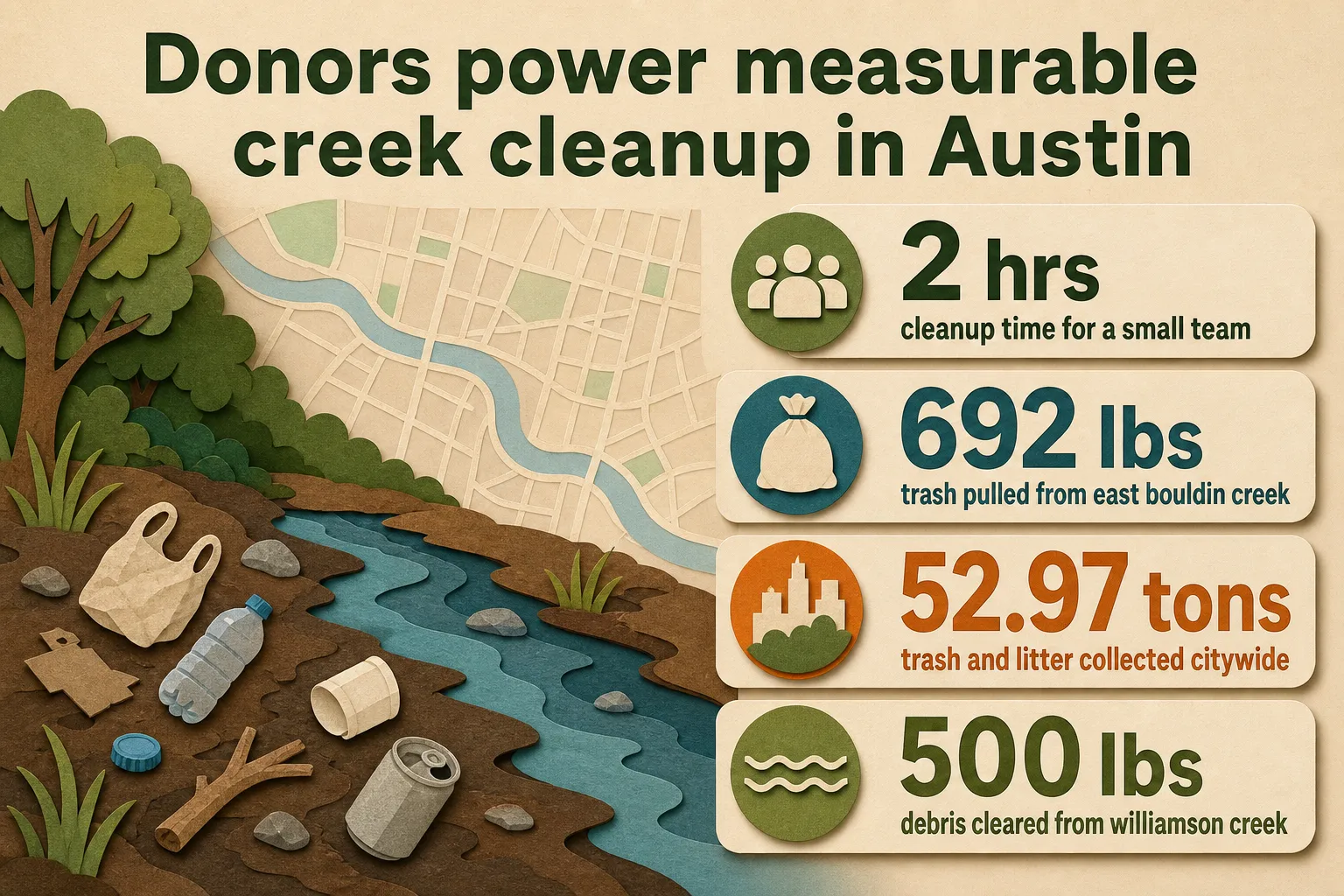
Two hours is enough time to drift through a South Austin brunch and leave it there. It was also enough time for a small Make Austin Clean team to pull 692 pounds of trash out of East Bouldin Creek. That is the kind of environmental number I trust because it records pounds pulled from the creek rather than an abstract, modeled, or deferred benefit.
Those are pounds pulled from the creek and gone.
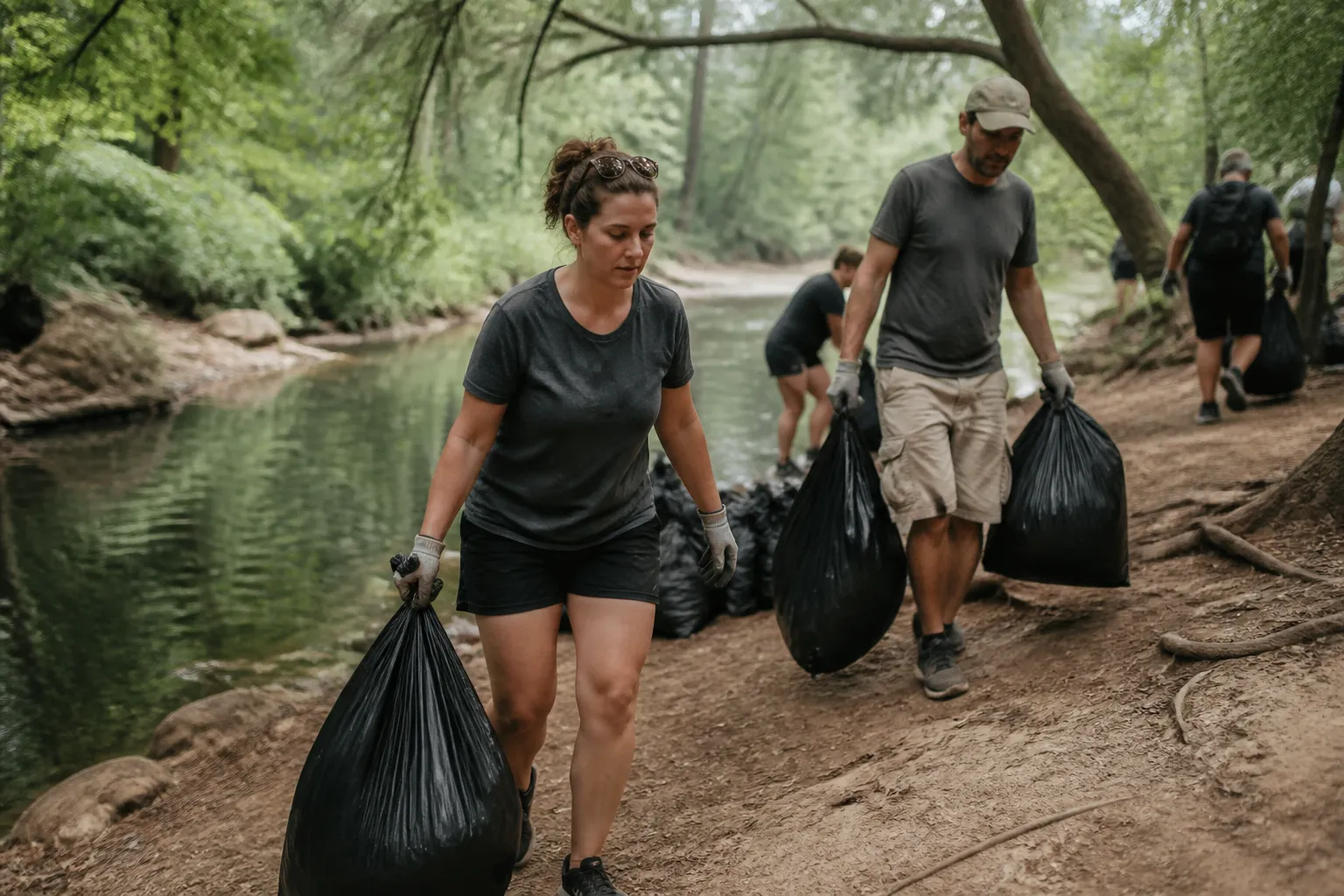
For donors trying to decide where an Austin creek-cleanup gift should land, that matters, as does scale. Make Austin Clean is the big visible cleanup engine: weekly events, neighborhood days, litter patrols, and creek and park cleanups across Austin. According to the organization, as of June 2026 it had collected 52.97 tons of trash and litter and mobilized more than 651 volunteers. South Austin Creek Alliance is the narrower, more place-obsessed counterpoint, focused on waterways south of the Highway 71/290 corridor through cleanups, invasive species removal, guided cave tours. One bet gives you volume you can tally. The other gives you stewardship with roots.
Creek cleanup in Austin: Make Austin Clean makes environmental giving feel gloriously literal
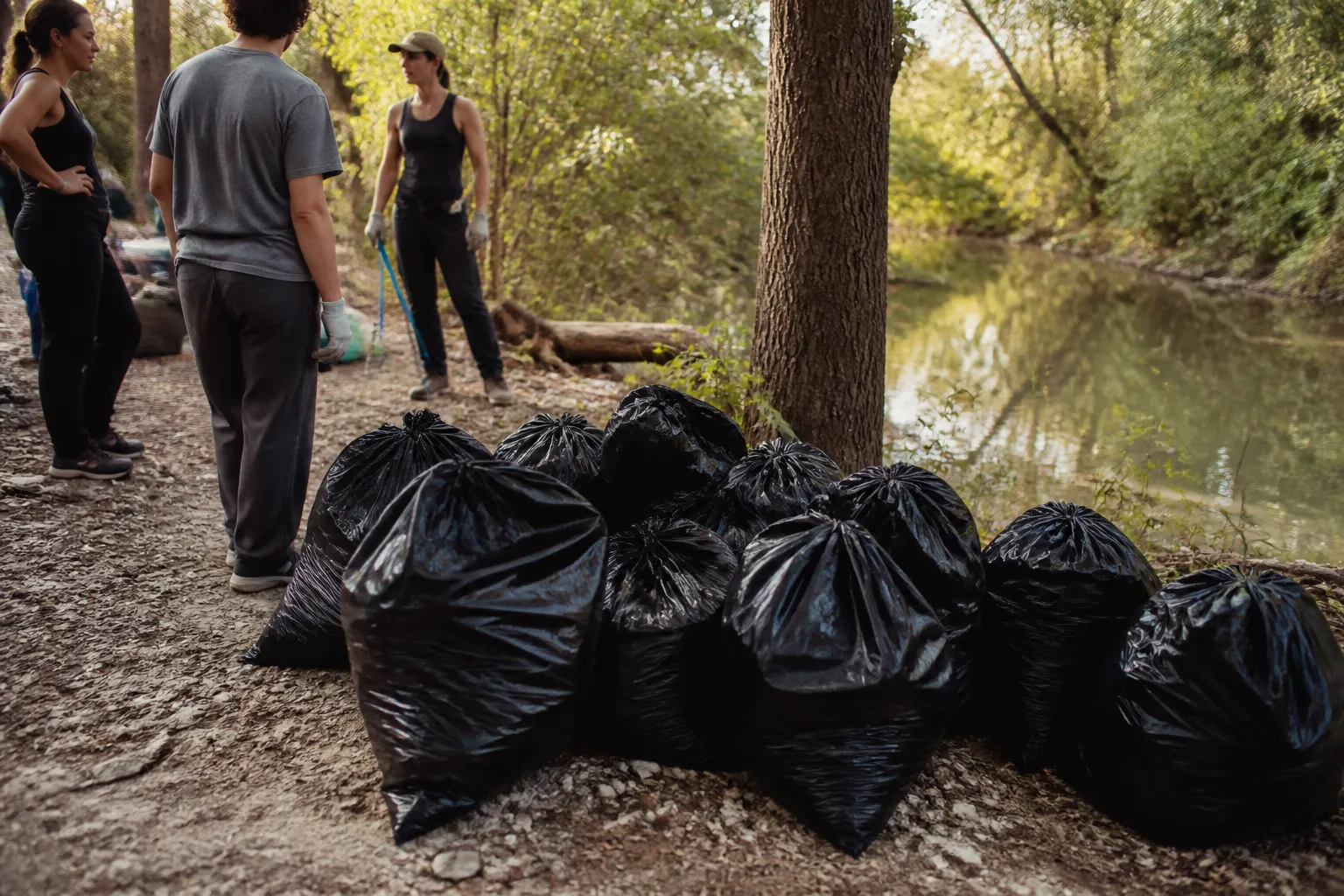
Cary Capece founded Make Austin Clean in early 2022 after moving to Austin’s Bouldin Creek neighborhood in 2017 and wanting to give back to his new home. That origin story has the right level of modesty. Capece moved somewhere, cared about the place, and started getting people outside with gloves.
What makes the organization stand out is not just that it cleans. Plenty of groups can organize a one-off event and snap a nice photo. Make Austin Clean’s edge is cadence. Weekly community cleanup events make this a civic habit, repeated often enough to shape how residents care for Austin. The program list names neighborhood clean-up days, litter patrols, creek and park cleanups, and residents and local businesses showing up together. The form is simple because the point is repetition.
You can feel the difference between an annual volunteer day and a weekly ritual. One asks people to care for a morning. The other changes what a city expects of itself.
That matters more than environmental giving sometimes admits. Trash is one of the few urban problems that compounds in plain sight. Leave it on a street, and it does not stay a street problem for long. Make Austin Clean even publishes on how neighborhood cleanups can keep litter from entering creeks and waterways, which is exactly the kind of unglamorous systems thinking I want from a cleanup group. Start at the block, spare the creek.
According to Make Austin Clean, by June 2026 the group had removed 52.97 tons of trash and litter across Austin, including its creeks and parks, with more than 651 volunteers involved. The East Bouldin Creek example is even better because it feels local enough to touch. In one two-hour cleanup, a small team removed 692 pounds. The organization called it “This is the power of community action.”
“It’s simple. Show up. Lend a hand. Support the work.” Make Austin Clean
Normally, I flinch at slogans that neat. Here it works because the needs are blessedly concrete. Donations fund trash bags and gloves, support cleanup events in parks and along creek beds, and help sponsor events or employee volunteer days. The group also lists partnerships with the City of Austin, the Parks and Recreation Department, and the HEAL initiative, which gives this effort the useful feeling of being both grassroots and plugged in. If you want an Austin environmental donation that turns into immediate, visible before-and-after, this is a very clean case.
South Austin Creek Alliance goes narrower, and that is exactly the point
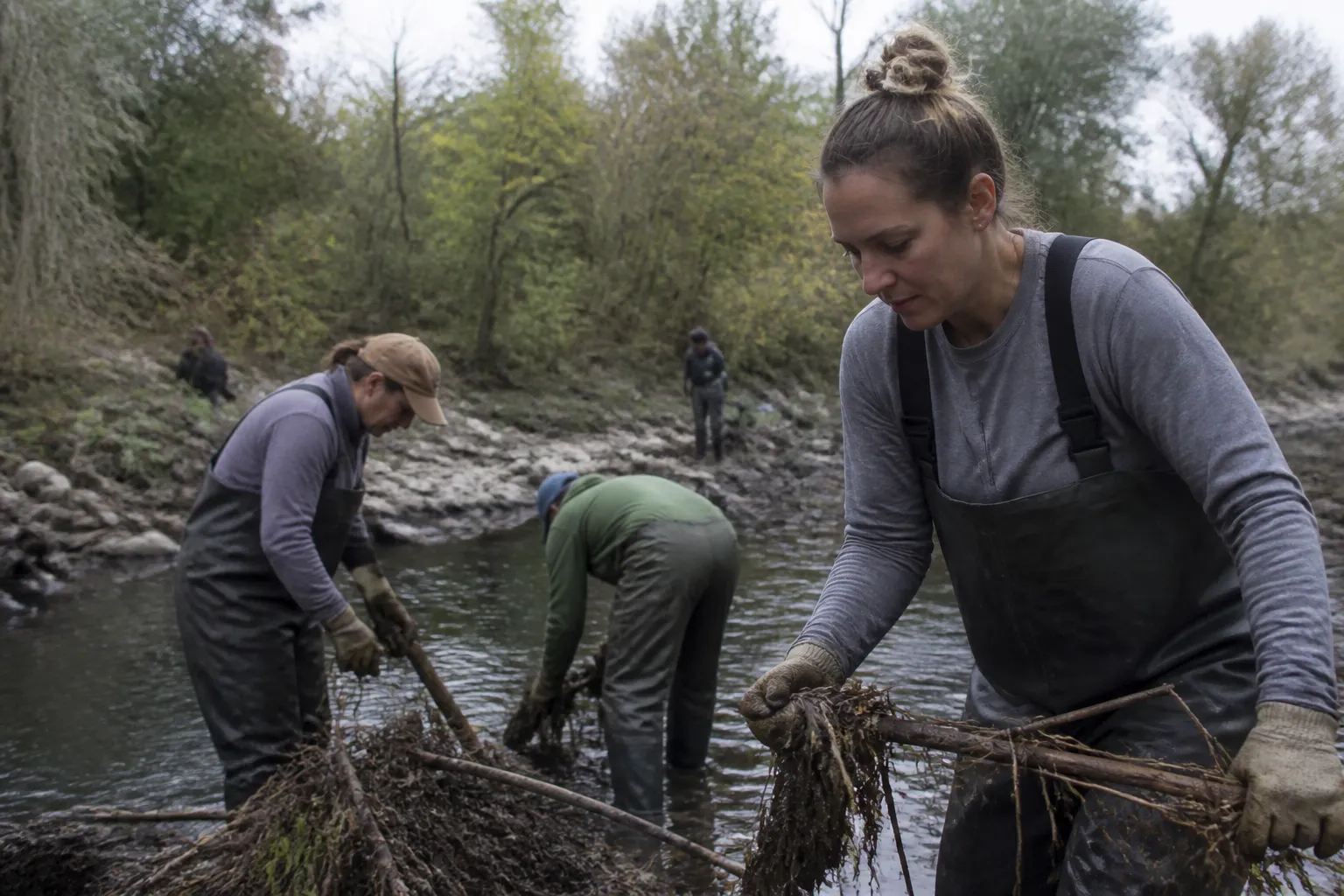
South Austin Creek Alliance was founded in 2021 by Valarie Campbell, and its geographic discipline is the whole appeal. This group protects urban waterways throughout South Austin, especially south of the Highway 71/290 corridor. It knows exactly where it is standing.
That focus makes the work feel like neighborhood fluency, grounded in the creeks south of the Highway 71/290 corridor. The alliance runs creek cleanups, but cleanup is only the front door. Its programs also include invasive species removal, guided cave tours, public education and outreach, and creek advocacy. That combination is smarter than it looks. A healthier waterway has fewer bottles in it and residents who understand how their local creek system works.
Get the weekly digest
New stories, new nonprofits, every Tuesday morning.
This is an organization built around the creek beds and greenbelts that shape South Austin.
The alliance’s own story from Williamson Creek gets at the urgency. After several rain events in early October, volunteers helped clear trash and debris from the creek, removing at least 500 pounds in one day, according to South Austin Creek Alliance. That is the hyperlocal version of impact. A specific waterway gets relief when weather turns ordinary litter into moving debris, rather than the result being reduced to a citywide tonnage total.
The part I find especially persuasive is that the organization is not content to leave people with a trash picker and a thank-you. Its 2025 news items dug into invasive species management, including girdling Ligustrum, and habitat restoration in urban waterways. Its recurring events include Habitat Happy Hour, and it has run date-specific events like the Wildflower Cave Tour and Salamander Day. The cave programming, supported by donated safety equipment, belongs to that larger water story. It is a way of teaching people that creeks are part of a larger water story, including local cave systems and the Edwards Aquifer.
“Protecting the planet starts in your backyard,” the organization says. In weaker hands that line would read like a poster. Here it lands because the backyard is literal. Specific sites such as Williamson Creek West Greenbelt are part of South Austin’s lived-in map. South Austin Creek Alliance’s current needs include volunteers for cleanups, people to organize creek-care events, and Creek Committee leaders for specific sites, giving the work an address.
The right donor question is not “Which is better?” It is “What kind of proof do you want?”
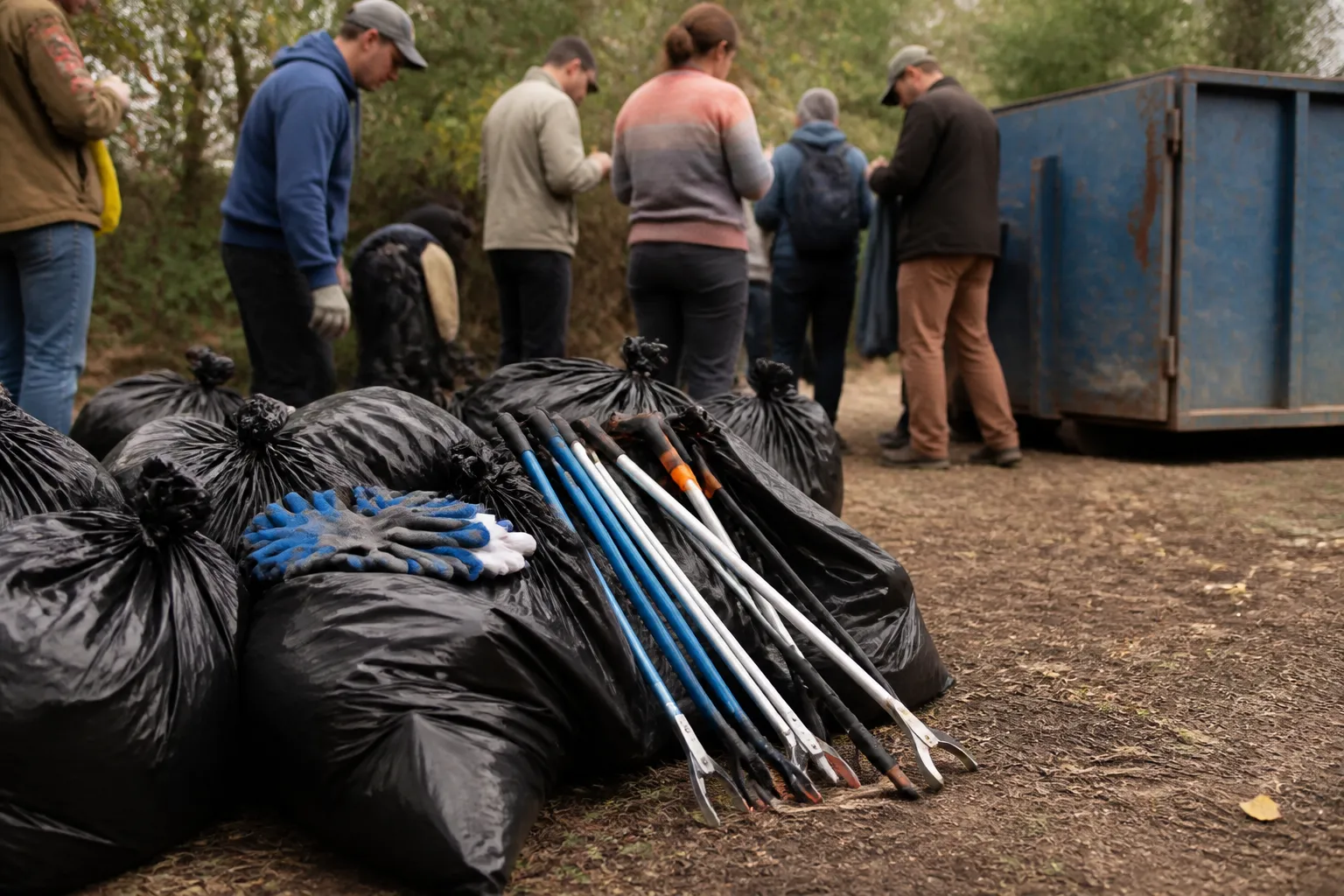
These are two very different environmental bets, and Austin is better off for the distinction. Their best case for support is a dirty glove, not a gala table. Their best case for support is a dirty glove.
Make Austin Clean is the scale play. Donors who like evidence they can see at the curb will find it compelling. The more than 651 volunteers, according to the organization, tell you this is not one energetic founder dragging friends into the same Saturday forever. The reported 52.97 tons tells you the machine is already doing real work. It is the donation for people who want to see a citywide cleanup movement become normal civic behavior.
South Austin Creek Alliance is the depth play. The appeal includes what gets understood and protected around it: a Williamson Creek cleanup after rain, invasive removal in riparian areas, and cave tours that connect surface water to what lies underneath. Monthly gatherings like Habitat Happy Hour that keep the community tissue alive between workdays. This is what it looks like when a nonprofit refuses to treat “the environment” as a giant blur.
My take: most donors underestimate how much value there is in choosing a group with a clearly bounded unit of change. For Make Austin Clean, the unit is the recurring, citywide cleanup event. For South Austin Creek Alliance, it is the specific South Austin waterway and the people who will keep returning to it. The two approaches are concrete and measurable, but they answer different donor temperaments.
Choose South Austin Creek Alliance when you want money to stay close to a particular watershed and support the less flashy work of creek culture, including education, invasive management, advocacy, and site leadership. And if you have ever wondered whether a creek cleanup in Austin can be more than a ceremonial morning with gloves, these two organizations are your answer. One moves the city. The other teaches a neighborhood to care for its own water.
Choose Make Austin Clean when fast, visible results are the point.
So here is the practical move: decide whether you want Austin-wide cleanup volume or South Austin watershed stewardship, then fund the literal tools that keep it happening. Sponsor Make Austin Clean’s trash bags, gloves, or employee volunteer day support, or cover South Austin Creek Alliance’s pickers, dumpster rentals, or Creek Committee organizing. Pick the version of mud you believe in, and back it.
Frequently asked questions
- What Austin nonprofits focus on creek cleanup and litter removal?
- Two strong local options are Make Austin Clean, which runs weekly cleanups across Austin, and South Austin Creek Alliance, which focuses on waterways south of the Highway 71/290 corridor.
- How much trash has Make Austin Clean removed?
- According to Make Austin Clean, as of June 2026 it had collected 52.97 tons of trash and litter and involved more than 651 volunteers.
- Where does South Austin Creek Alliance work?
- South Austin Creek Alliance works in South Austin, focusing on creeks, tributaries, and dry creek beds south of the Highway 71/290 corridor.
- Does South Austin Creek Alliance do more than creek cleanups?
- Its programs also include invasive species removal, guided cave tours, public education and outreach, and creek advocacy.
- Can I volunteer or sponsor cleanup work with these groups?
- Yes. Make Austin Clean invites volunteers to weekly events and offers business sponsorship and employee volunteer day options. South Austin Creek Alliance needs cleanup volunteers, creek-care organizers, and Creek Committee leaders for specific sites.
- makeaustinclean.org ↗
- Make Austin Clean was founded in 2022 by Cary Capece in Austin and mobilizes people to clean Austin’s streets, creeks, parks, and neighborhoods.
- As of June 2026, Make Austin Clean reported 52.97 tons of trash and litter collected and more than 651 volunteers involved.
- A two-hour East Bouldin Creek cleanup led by Make Austin Clean removed 692 pounds of trash.
- southaustincreekalliance.org ↗
- South Austin Creek Alliance was founded in 2021 by Valarie Campbell and protects urban waterways in South Austin, south of the Highway 71/290 corridor.
- South Austin Creek Alliance’s programs include creek clean-ups, invasive species removal, and guided cave tours.
- South Austin Creek Alliance had active 2025 news items and recurring events including Habitat Happy Hour and Wildflower Cave Tour.
- makeaustinclean.org ↗
- “This is the power of community action.” — Make Austin Clean
- “It’s simple. Show up. Lend a hand. Support the work.” — Make Austin Clean
- southaustincreekalliance.org ↗
- “Protecting the planet starts in your backyard.” — South Austin Creek Alliance