
Three Ways to Support Affordable Housing in Missoula, From Steady Rent to Renter Power
Missoula’s housing challenge has three useful donor lanes: keep homes permanently affordable, help families hold onto stability, or give renters the tools to act together. This is the giving map for people who want their housing dollars pointed at a specific lever.

“We organize, we fight, and we win together,” says the Missoula Tenants Union. In 2025, Travois Village residents formed a supermajority tenants’ union, turning that renter-led principle into a concrete organizing example in Missoula.
Missoula affordable-housing giving deserves this kind of specificity. It can keep a family from spiraling deeper into homelessness after a rent shortfall or transportation snag. It can help renters knock on doors, compare notes, learn their rights, and organize a building.
A gift can preserve a home’s affordability across owners.
How affordable housing in Missoula, MT stays attached to the home
Front Step Community Land Trust began in Northside neighborhood organizing in 1996 and completed Whittier Court, its first development, in 2002. The trust brings land into community ownership, while buyers purchase the home. Alongside that land-trust work, it uses housing co-ops and deed restrictions to keep homes within reach and neighborhoods involved in the decisions shaping them.
The organization reports that it has grown to more than 90 permanently affordable homes since 1996. In 2024, it reports supporting more than 30 households through resale and homeowner stewardship. When rentals went up for sale, eight households came together to collectively purchase their homes as Missoula's first limited-equity housing cooperative.
“We demolish walls that restrict wealth to the few.” — Front Step Community Land Trust
North-missoula Community Development

Gayl Teichert and Ernie Franceschi describe how aging and retirement made housing realities immediate: “Aging and retirement brought reality to our door. We are so thankful that Front Step CLT could provide vibrant and multigenerational housing for people like us.” Donations support stewardship for current homeowners and co-op members, neighborhood organizing, housing-justice advocacy, and the Burns Street Center, where the organization reports hosting more than 40 community events, meetings, and public gatherings in 2024.
Family Promise catches the crisis before it hardens
Housing instability rarely arrives as a single dramatic event. It accumulates through a rent bill, a missed ride, a thin grocery budget, an interrupted job search, and the exhausting logistics of parenting through all of it. Family Promise of Missoula works across that sequence.
Families who need emergency shelter can receive case management and meals at the Missoula Family Housing Center. After a family moves into housing, the Just Neighbors Stabilization Program offers continued help around financial capability, employment goals, and community connections.
Its prevention services include shelter diversion, rental assistance, and transportation.
Get the weekly digest
New stories, new nonprofits, every Tuesday morning.
Tara and Todd’s account gives that sequence a human scale. They said Family Promise helped them get their children back from the state, take responsibility for their lives and finances, and maintain housing in a four-bedroom house. “Life is less chaotic, and we are able to enjoy a normal everyday life,” they said.
Family Promise reports that 87% of families it shelters find housing. It also reports serving 1,460 family meals in 2023 and engaging 600 volunteers in Missoula. The group solves the immediate emergency and stays close enough for stability to take hold.
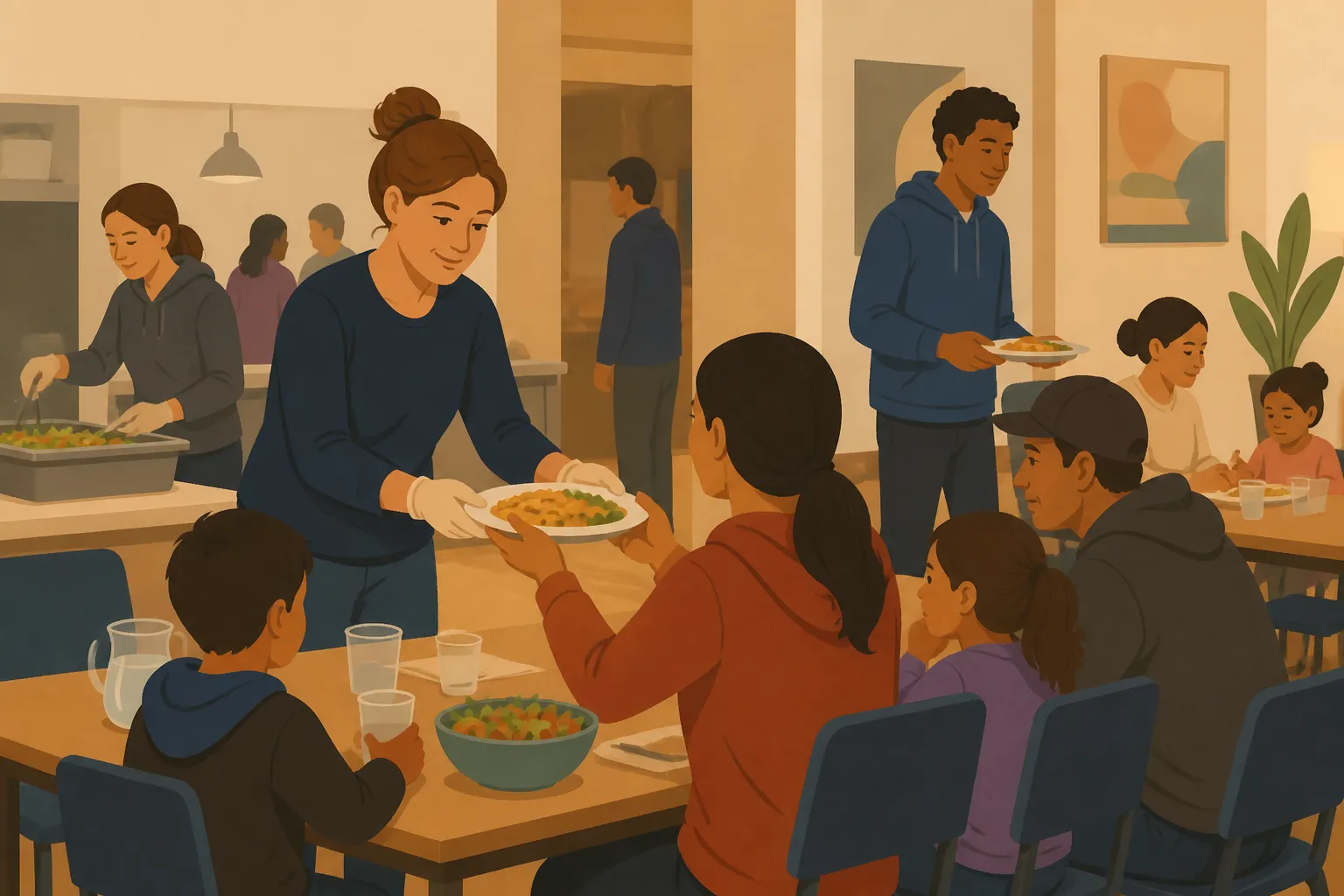
Its current needs make a gift unusually tangible. Gas cards can keep appointments and work options within reach. Gift cards, diapers, baby wipes, and household supplies can fill welcome baskets for families entering a new home. Fund this lane when you want to help a family regain traction during the fragile stretch between crisis and a durable address.
Tenant power begins with a conversation at the door
The Missoula Tenants Union started in 2022 with renters who were tired of facing housing instability alone. Its building-organizing work helps tenants form unions around repairs and fair treatment. Its Front Step canvassing program goes door to door to hear directly from renters and build relationships across neighborhoods. Workshops and know-your-rights resources give tenants material they can use before entering a public meeting or starting a conversation with neighbors.
Travois Village’s 2025 supermajority union is a concrete example of the approach’s neighborhood-level ambition. The union says, “We organize, we fight, and we win together.” A contribution can support canvassing, renter-survey outreach, tenant-rights education, training, building-level organizing, and state-level housing advocacy through United Neighbors United.

The union lists canvassing volunteers among its current needs, and organizing requires people who can show up repeatedly, listen carefully, and follow through. Donors who want to widen renters’ collective leverage should fund that groundwork or spend an afternoon canvassing with the Front Step crew.
Frequently asked questions
- What are the best ways to support affordable housing in Missoula?
- Choose based on the outcome you want. Front Step supports permanently affordable homeownership, Family Promise helps families prevent and recover from housing crises, and Missoula Tenants Union builds collective renter power.
- Which Missoula nonprofit supports permanently affordable homeownership?
- Front Step Community Land Trust uses community land trusts, housing co-ops, deed restrictions, organizing, and advocacy. The organization reports more than 90 permanently affordable homes since 1996.
- How does Family Promise of Missoula help families avoid homelessness?
- Its prevention services include shelter diversion, rental assistance, and transportation. It also provides emergency shelter, meals, case management, and post-housing stabilization support.
- How can I help renters organize in Missoula?
- Support the Missoula Tenants Union’s canvassing, tenant-rights education, training, and building-level organizing. The union also lists canvassing volunteers as a current need.
- Resident-Driven Zoning Reform in Missoula — montanafreepress.org ↗
- Missoula’s Travois Village residents form a supermajority tenants’ union — kpax.com ↗
- Mobile home park tenants launch union to fight rent hikes — montanafreepress.org ↗
- Missoula mobile home residents form second tenants’ union amid rent disputes — kpax.com ↗
- frontstepclt.org ↗
- frontstepclt.org ↗
- Front Step Community Land Trust was founded in 1996 and its model uses community land trusts, housing co-ops, deed restrictions, community organizing, and advocacy to make permanently affordable homeownership and equitable neighborhoods possible.
- Front Step’s first development, Whittier Court, was completed in 2002.
- familypromisemissoula.org ↗
- Family Promise of Missoula’s mission is to help families experiencing homelessness and low-income families achieve sustainable independence through a community-based response.
- Family Promise of Missoula’s prevention services include shelter diversion, rental assistance, and transportation programs, alongside emergency shelter and case management.
- missoulatenantsunion.com ↗
- Missoula Tenants Union was founded in 2022 to advocate for tenants and build solidarity in order to create collective power for secure, affordable, and decent housing.
- kpax.com ↗
- In 2025, Travois Village residents formed a supermajority tenants’ union, a concrete example of the Missoula Tenants Union’s organizing model.
- frontstepclt.org ↗
- “We demolish walls that restrict wealth to the few.” — Front Step Community Land Trust
- missoulatenantsunion.com ↗
- “We organize, we fight, and we win together.” — Missoula Tenants Union