
Rent Help Runs Out. Dallas County Has Eviction Court Backup.
Most housing donors picture rent relief first. Dallas Eviction Advocacy Center makes the sharper case when an eviction filing lands. A lawyer can provide the intervention that actually keeps a family housed, and in 2024 the group provided full representation to 5,175 clients.
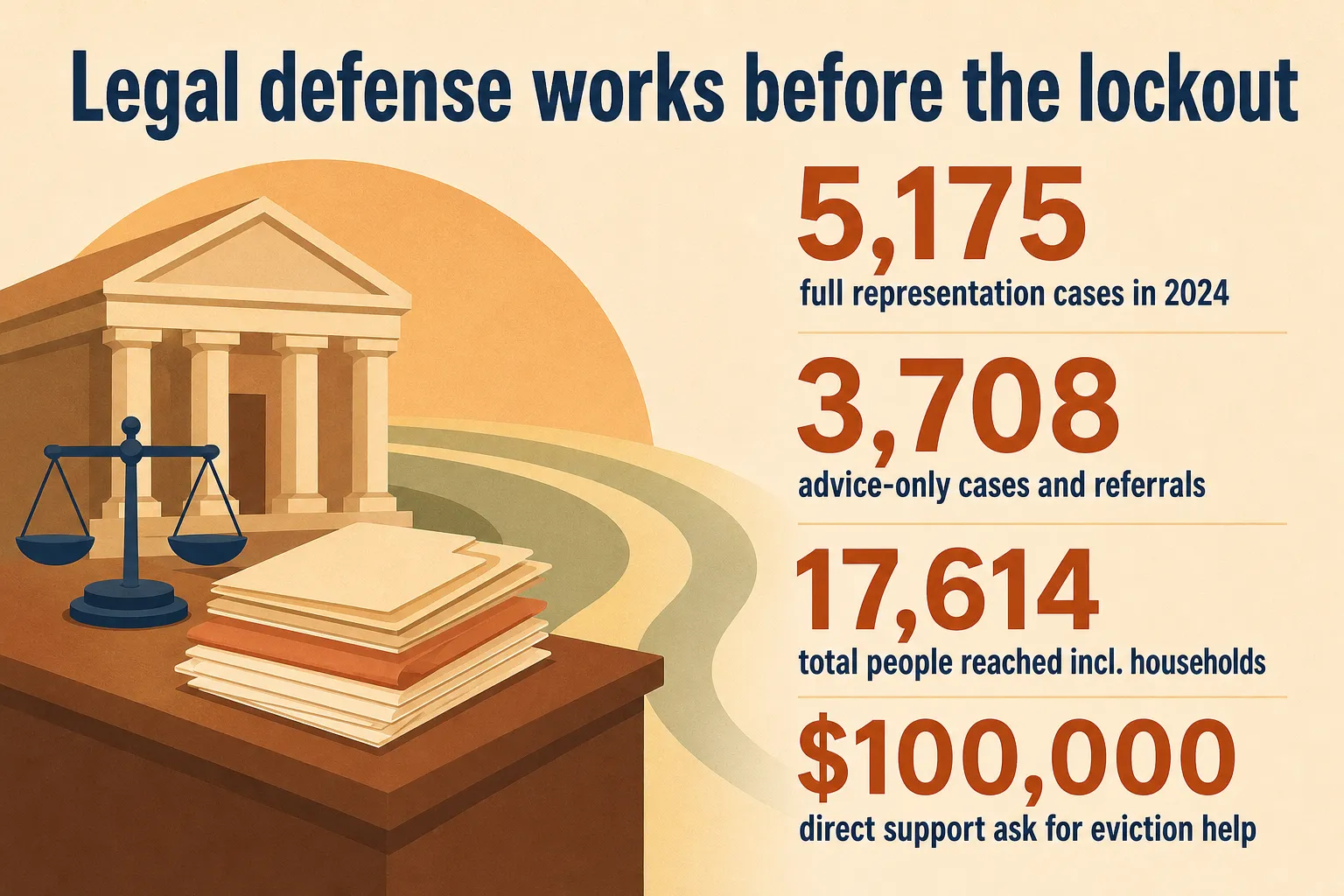
5,175 is the number that should reset how you think about housing giving in Dallas. If you landed here trying to figure out how to support tenant rights in Dallas TX, stop picturing only emergency rent checks. In 2024, Dallas Eviction Advocacy Center provided full legal representation to 5,175 clients facing eviction. A lawyer attached to the case provides direct representation.

Most donors hear housing insecurity and imagine a family short on rent. That is real, and Dallas Eviction Advocacy Center does offer housing assistance and rent relief. But the sharper insight is that a housing crisis often becomes a legal crisis before it becomes a moving truck. Once the notice to vacate arrives, once the forcible detainer case is filed, the question is no longer just whether money exists somewhere in the ecosystem. The question is who is actually showing up with the tenant.
At a Dallas County eviction docket, the difference is visible at the table: one tenant standing alone, another with a lawyer beside them. Dallas Eviction Advocacy Center exists to make sure more tenants fall into the second category. It serves Dallas County tenants facing eviction regardless of income, race, immigration status, or native language. That is the right scope. Eviction court is not the place to discover that access was narrower than the rhetoric. A deadline you cannot read is still a deadline.
The organization puts it more plainly than most nonprofits do:
"Free eviction defense for Dallas County tenants, with real help that reaches beyond the courtroom."
That is the rare nonprofit line that actually says what the work is. Plain language and a clear scope. Free defense, in Dallas County, for people with an eviction case in front of them. Donors should reward that kind of precision, because precision is usually a sign that the program itself has one.
The housing intervention donors keep missing

What makes DEAC compelling is not that it cares about housing. Plenty of organizations care about housing. What makes it worth donor attention is that it treats legal defense as homelessness prevention, not as some separate, wonkier category living off to the side.
That sounds obvious once you say it out loud, but donors miss it all the time. Donors fund shelter after displacement. They fund rent after arrears. Abstract advocacy gets funding with the vague hope that it changes the weather. Meanwhile, the decisive moment can be much more mundane: a tenant needs legal advice, or full representation, before the lease is gone. DEAC's program list reads like an answer key to that reality—pro bono legal advice, pro bono legal representation, housing assistance, rent relief, and tenant and eviction information—because the smartest interventions here are stacked, not siloed.
The organization's own materials go beyond courtroom appearances. It publishes guides on the eviction process in Texas, including notice to vacate and forcible detainer, plus tenant resources such as court orders, templates, files, and forms. That may sound unglamorous. Good. Housing work should be practical and useful. A family trying to stay housed does not need a beautifully worded mission statement nearly as much as they need the right document, the right deadline, and the right person telling them what happens next.
That stack is the whole point. A tenant may need a lawyer, a referral, rent relief, or plain-language information, and the worst design would force them to guess which doorway matters most.
KERA News has covered the same asymmetry from the outside: Dallas County tenants who get a lawyer are less likely to be evicted, but most do not have one. DEAC exists in that gap, and the gap is exactly where smart donors should look.
A grassroots scramble became a legal-defense system

The origin story matters because it explains the organization's posture. Dallas Eviction Advocacy Center began as a grassroots effort in March 2020 and formalized in 2021. Plenty of emergency responses appear in a burst of moral clarity and then drift into general-charity mode. This one hardened into infrastructure.
You can see that in the people around it. The organization's listed leaders include Board Chair Mark Melton, a partner at Holland & Knight, LLP, as well as Lauren Melton and Bill Holston. D Magazine profiled Mark Melton and the eviction defense work around landlord-tenant court, which feels less like a vanity detail than a clue: this organization understands that if the threat is legal, the response has to be legal too.
The through-line from March 2020 to now is design. Grassroots energy got the work moving; a formal organization gave it staying power. That is how emergency response turns into a public-facing institution people can actually find when the paperwork shows up.
And yet it is not legalism for its own sake. The organization's programs explicitly include housing assistance and rent relief alongside representation. That combination matters. Some groups stop at the courthouse door; some never get there. DEAC is more interesting because it refuses that false choice. The legal case matters. So does the practical work that lets a tenant stabilize long enough for the legal help to matter.
For donors, that blend should read as maturity. You are not funding a one-note theory of change. You are funding an operation that knows an eviction case is both a filing and a family emergency.
Get the weekly digest
New stories, new nonprofits, every Tuesday morning.
What 5,175 full-representation cases actually means
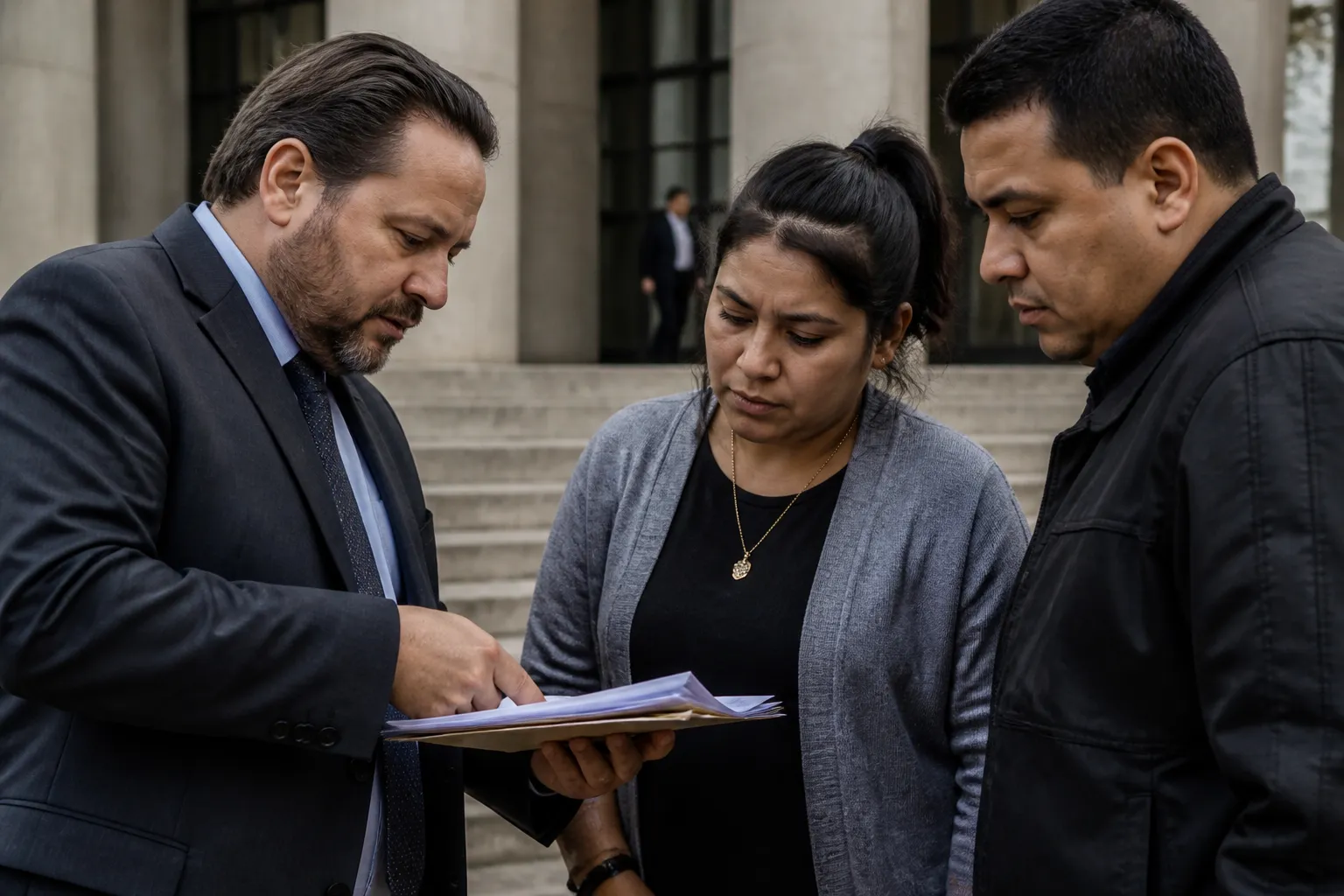
The best number in this story is still 5,175, because it is the opposite of vanity metrics. Full representation is hard to fake as impact. It means the work got real.
Here is the 2024 picture:
In 2024, that work showed up in 5,175 full-representation cases, reaching 12,638 people when household members were included. Another 3,708 individuals got advice-only cases and referrals, for a total reach of 17,614 people. Behind those numbers is the same basic scene: a tenant in a hearing room with a stack of papers, and someone on their side who knows the rules.
The split between full representation and advice-only work also tells you something useful. Not every case needs the same depth, and not every tenant arrives at the same point in the process. A serious defense organization has to absorb both realities without pretending a referral is the same thing as standing up in court.
That scale is the impressive part. With 21 staff and seven volunteers, DEAC reported full representation for 5,175 clients in 2024 while also handling thousands of advice-only cases and referrals. This is a Dallas County eviction-defense operation serving tenants at scale. It is a real operating system for eviction defense in Dallas County.
And the household numbers are worth lingering on. The Form 990 reports 12,638 people reached when household members were included in full-representation cases. In total, including household members, the organization says it reached 17,614 people in 2024. That is a useful corrective to the way we talk about eviction as if it happens to an isolated individual. It does not. The case caption might name one tenant. The disruption ricochets through children, partners, elders, roommates—whoever shares that address and whatever stability that address represented.
This is also why I think donors should stop treating courtroom defense as a niche add-on to housing work. It is central. When the organization says donations fund direct support for families facing eviction and pro bono legal advice and representation, believe the order of operations there. The lawyer is not the extra. The lawyer is often the hinge.
Rent relief can buy time; representation can change the terms of the fight.
If you want to support tenant rights in Dallas TX, fund the hinge

DEAC's current public ask is admirably concrete: $100,000 to directly support families facing eviction. I will take a specific funding gap over a fog machine any day. It tells you the organization knows what the work costs and is willing to say so plainly.
That distinction is where a lot of housing giving goes soft. We like the idea of prevention, but we often fund it only in the most sanitized forms. It is messier to explain. It is also much closer to the moment that decides whether a family stays put.
Eviction defense is prevention with paperwork, deadlines, and legal strategy attached.
The case for supporting that ask is straightforward. Dallas Eviction Advocacy Center serves Dallas County tenants facing eviction regardless of income, race, immigration status, or native language. It offers both advice and full representation. It pairs legal defense with housing assistance, rent relief, and practical tenant information. And in 2024, it put those promises on the board at scale: 5,175 clients directly served through full representation, 3,708 individuals helped through advice-only cases and referrals, and 17,614 people reached in total when household members were included.
There is also a clean secondary lane here for professionals. Lawyers can reach out for pro bono cases, receive training, and assist tenants from start to finish. That matters because one of the quiet virtues of this organization is that it does not romanticize expertise; it puts expertise to work.
If you are a tenant in Dallas County and need help, the organization provides application links for people living in the city of Dallas and for people living outside the city but within the county. If you are a donor, the better move is not to wait until a family is already displaced and then act shocked by the cost of fixing everything downstream.
Fund the part that shows up before the lockout: help Dallas Eviction Advocacy Center close its $100,000 need to directly support families facing eviction.
Frequently asked questions
- What is a strong way to support tenant rights in Dallas TX?
- If your goal is keeping tenants housed before lockout, Dallas Eviction Advocacy Center is a strong fit. It focuses on pro bono eviction defense in Dallas County and reported 5,175 clients served through full representation in 2024.
- What does Dallas Eviction Advocacy Center do?
- It provides Dallas County tenants facing eviction with pro bono legal advice, pro bono legal representation, housing assistance, rent relief, and tenant and eviction information.
- Who can get help from Dallas Eviction Advocacy Center?
- The organization serves Dallas County tenants facing eviction, regardless of income, race, immigration status, or native language.
- Does Dallas Eviction Advocacy Center only give advice, or does it represent tenants in court?
- Its programs include pro bono legal advice and pro bono legal representation, and its 2024 Form 990 reports 5,175 direct clients served through full representation.
- Is Dallas Eviction Advocacy Center only for people inside the city of Dallas?
- It serves Dallas County tenants and provides separate application links for people living in the city of Dallas and for people living outside the city but within the county.
- dallaseac.org ↗
- Dallas Eviction Advocacy Center’s mission is to empower Dallas County tenants to maintain housing security by providing pro bono legal assistance.
- The organization is based in Dallas, Texas, and serves Dallas County tenants facing eviction regardless of income, race, immigration status, or native language.
- Its listed programs include pro bono legal advice, pro bono legal representation, and housing assistance.
- The organization began as a grassroots effort in March 2020 and the formation year listed is 2021.
- The 2024 Form 990 reports 5,175 direct clients served through full representation.