
ChamaDAO -> Bringing DAOs to Women's Savings Cooperatives
To be Kenyan is to participate in a Chama, whether directly, indirectly, once or continuously.
 RF
RFWhat you’re funding
To be Kenyan is to participate in a Chama, whether directly, indirectly, once or continuously. Chamas are a grassroots form of savings cooperatives common in Kenya.
Started in the 70s as a response to inaccessible credit, these groups were formed primarily by women. The women learned that collective savings with friends, neighbours or family multiplied their chances of raising capital. The Chama system, although completely decentralised, has maintained autonomy and democracy in its governance. Decisions are made on a continual basis and each member has a single vote regarding the dispersal of the commonly held resources. The number of registered chamas today stands at approximately 300,000 with a total of $4 billion, this number can actually be doubled to give the actual reality, as many chamas are unregistered and work informally.
Chamas are a system for the democratic management of community resources, and thus they are a prototypical kind of DAO. DAO's are blockchain native communities which own and govern both environmental and digital common resources. DAOs can be guardians of a community treasury, a water supply, or data around bioregional ecology.
----------------------------------- How can emerging technologies and concepts related to DAO's and the blockchain support and scale Chamas to bring resources and capacities to more women grassroots initiatives? ------------------------------------
East African Womens Savings Cooperatives
+
Web3 Decentralized Ownership and Governace of Commons
=
ChamaDAO
------------------------------------- CHAMAS ARE FEMINIST FINANCE - It can be argued that the Chama operating as an organism, adapting to include culture and compassion is due to the fact that it was women who pioneered its invention. ------------------------------------ ChamaDAO RESEARCH PILOT
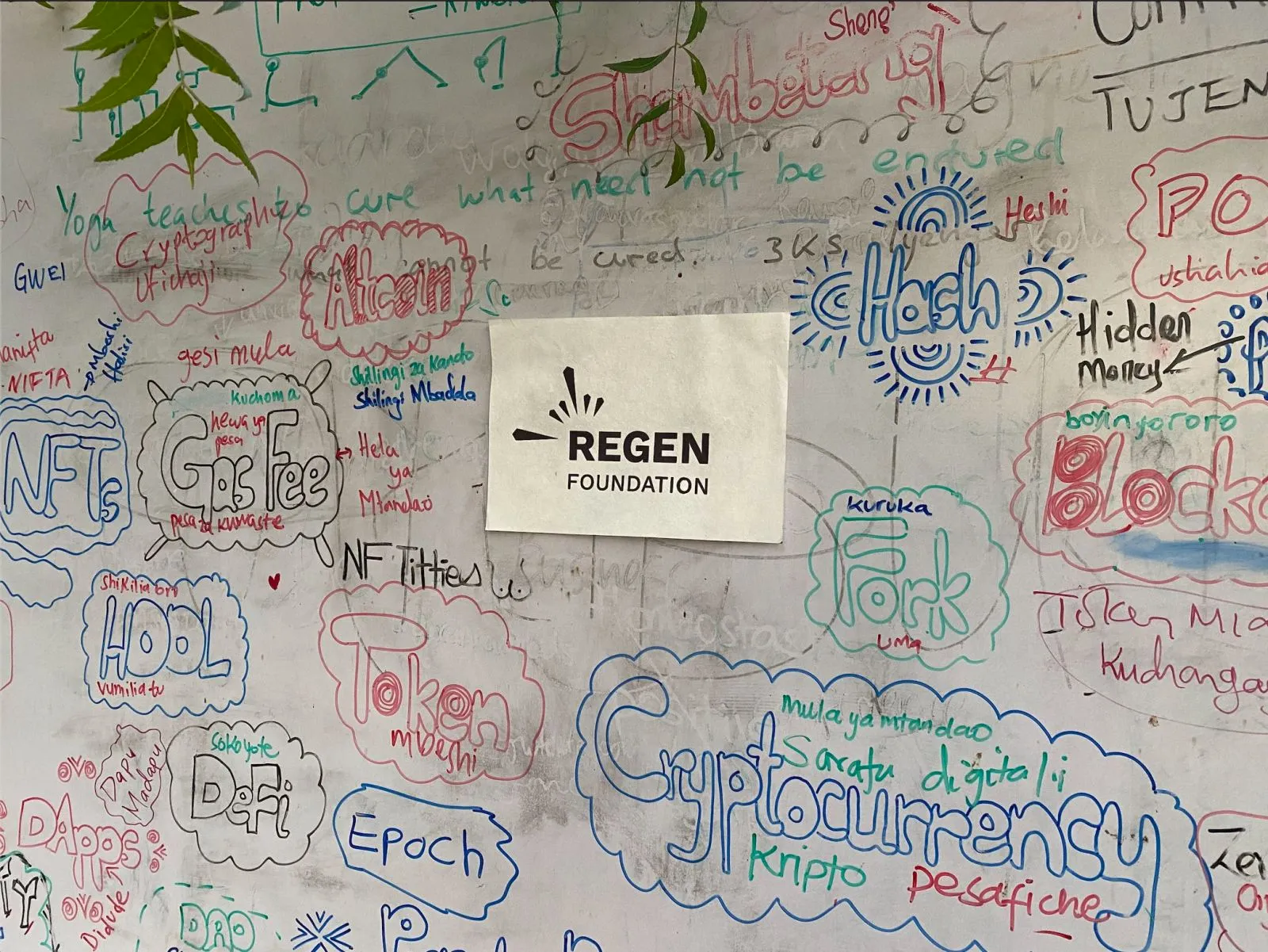
- The Regen Foundation is piloting on the ground research to understand how DAO governance, and mechanisms from regenerative finance can bolster the legacy and future of Chamas. We believe Chamas have developed a framework for grassroots feminist communities to fund and steward common resources, whether those be collectively held treasuries, or regenerative land management.
We will be rolling out updates on the ChamaDAO pilot project. Please consider making a donation to fund this essential research!
Got a question — or an idea — for the team?
Send a note and we’ll pass it along to Regen Foundation.
About Regen Foundation
Regen Foundation helps communities do more than talk about regeneration, it builds the tools and public resources that make it easier to practice. Its work reaches land stewards, grassroots and Indigenous communities, and anyone trying to understand how regenerative economics and ecological governance can work in real life. If you care about who gets a say in stewardship, this is an organization putting that question at the center. It supports practical, public-facing projects that turn ecological regeneration into something communities can help shape and govern.
What sets Regen Foundation apart is how directly it hands governance back to communities, including land stewards and, in some projects, ecological systems themselves. Its work also leans into rights-of-nature ideas and blockchain-based institutional design, not as buzzwords, but as tools for building covenants and stewardship structures with more local control.
About this work
Mission
Regen Foundation works to empower communities and co-create global systems that achieve and reward ecological regeneration. It develops tools and coordinates resources in service of communities stewarding ecological, economic, and human well-being.
Who they serve
Communities stewarding ecological, economic, and human well-being, including land stewards, grassroots and Indigenous communities, steward communities, and the broader public interested in regenerative economics and governance.
How your donation helps
- Developing ecological institutions and living covenants
- Supporting the operational core and team capacity
- Developing open-source software and institutional design frameworks
- Supporting collaborators, travel, and documentation
- Prototyping three new Ecological Institutions by mid-2026
- Applying the IDK in situ with partner communities
Programs
Endaoment program
Supports land stewards and other communities practicing diverse forms of regeneration to own and govern the Regen network by dispersing 30% of all token holding power to those who would otherwise not have a voice or representation in the space.
Public literacy program
Supports learning and knowledge exchange for the broader public on regenerative economics, ecological governance frameworks, and emerging technologies in service to planetary regeneration.
Ecological Institutions
A toolkit, compendium, and field guide for crafting animist organizations and reweaving life across social and ecological systems. It includes renewed creation mythologies, governance components, and narratives from collaborations with grassroots and Indigenous communities.
Recentering Legitimacy
A whitepaper and collaboration focused on centering local validation of information and partnering with steward communities in Ecuador, Kenya, Peru, New Zealand, and elsewhere.
Claims Run the World
An Attestation Engine that treats real-world events and outcomes as inputs for economics and policy decisions, supporting high-integrity assertions for ecological claims and contracts.
Ways to help
Current needs
- Funding to prototype three new Ecological Institutions by mid-2026
- Support for the operational core and team capacity
- Support for open-source software and institutional design frameworks
- Support for collaborators, travel, and documentation
Recognition & press
In the media
- Stanford Social Innovation Review, "The Next Generation of Mutualism"
Work at Regen Foundation? Claim this page free →