
12 students built a Houston support hub for immigrant families in 1974. The paperwork still changes lives.
At Houston Community Services in the East End, the work that changes lives is often a notary stamp, a tax return, or a USCIS form completed correctly. Founded in 1974 by 12 University of Houston students, the organization makes the unglamorous paperwork of stability feel like what it is: frontline community infrastructure.
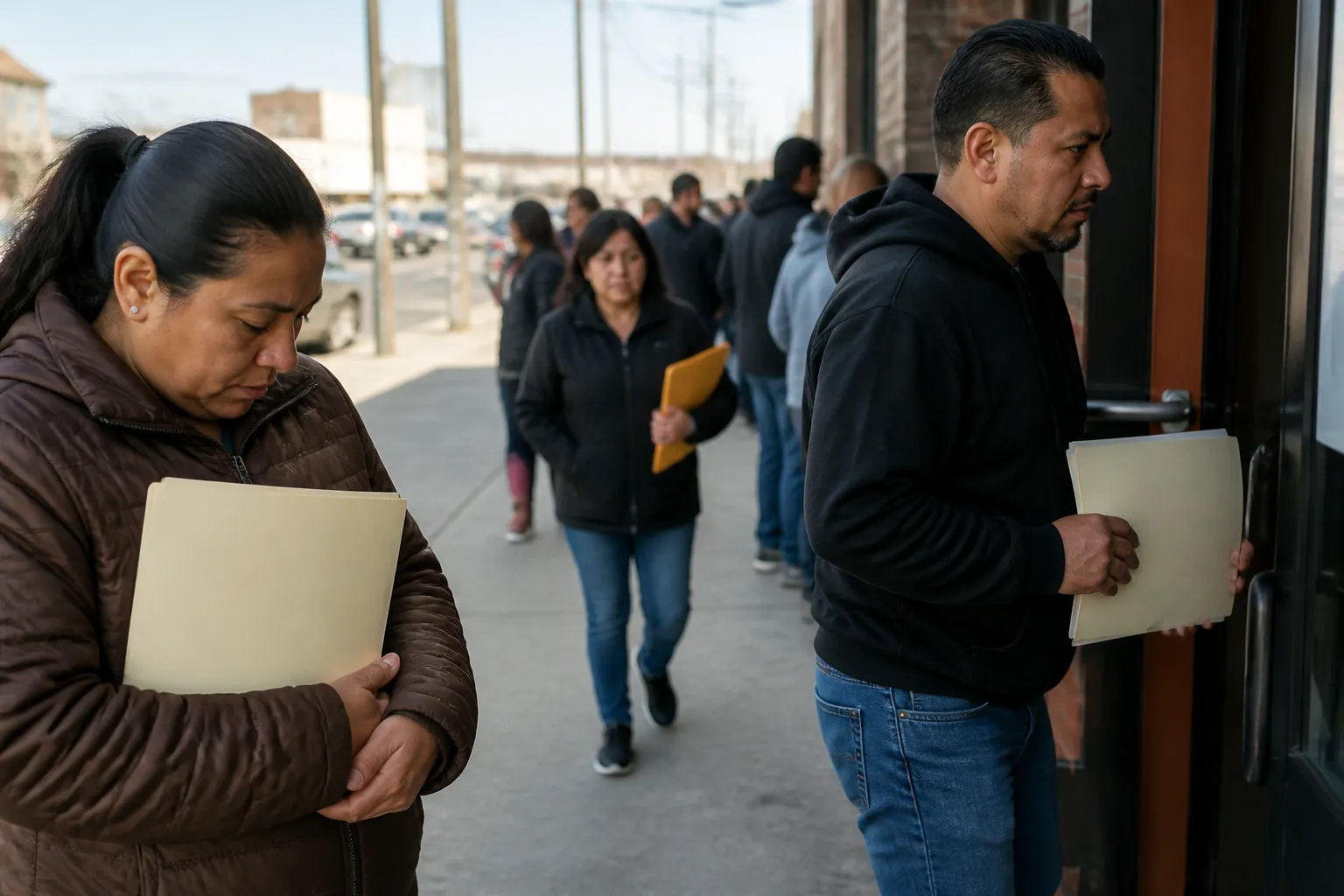
At 5115 Harrisburg Blvd, a life-changing moment can be a packet of tax documents held together with a paper clip. A notary stamp lands where it needs to. An immigration form is filled out correctly before a small mistake turns into a long delay. Houston has no shortage of organizations that can talk beautifully about community. Houston Community Services earns attention for something less glamorous and, in real life, more useful: it treats paperwork like survival gear.
That description captures the whole argument. In the East End, practical help sits at the center of the mission.
Houston support for immigrant families begins at the paperwork desk
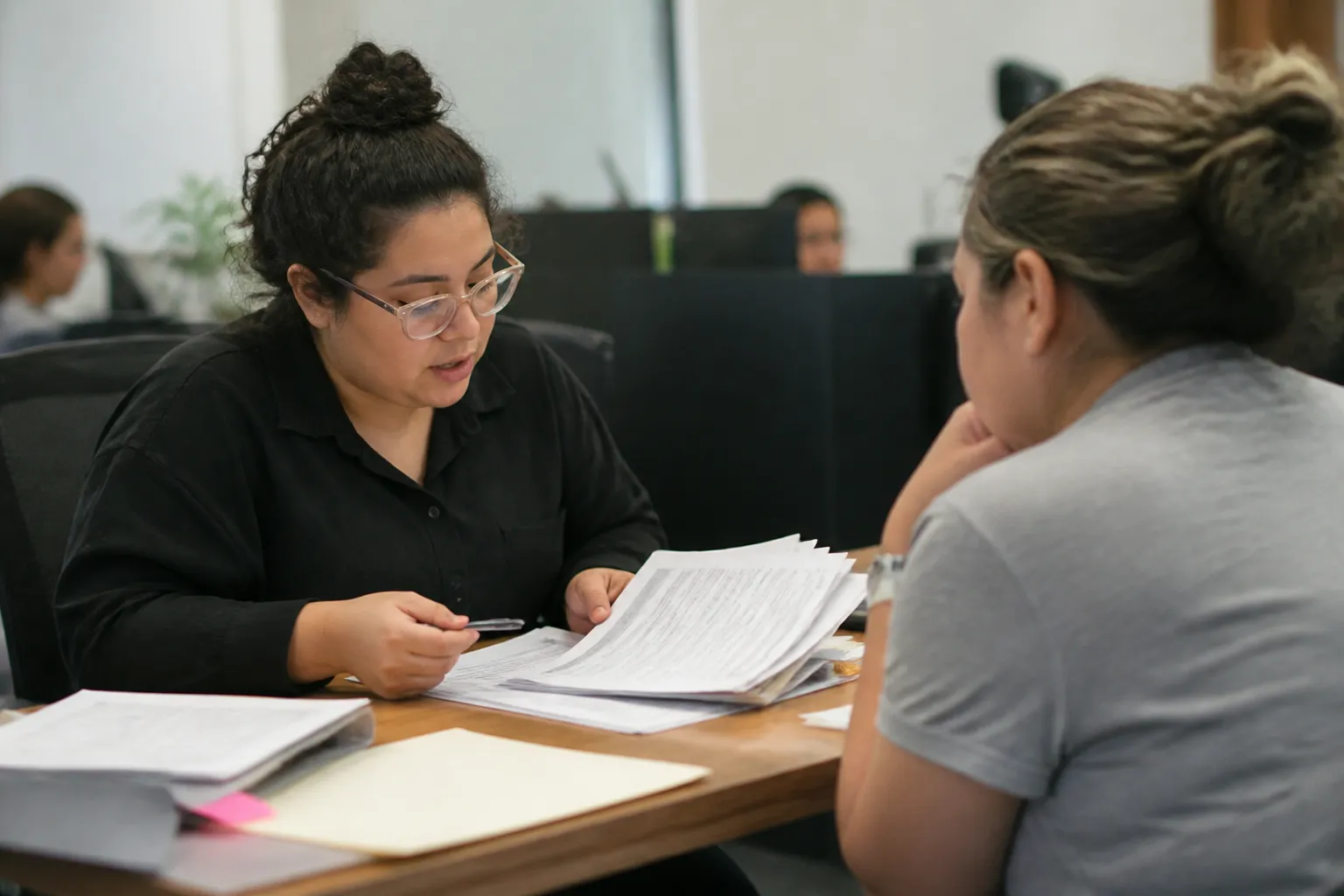
Houston Community Services says its program list includes immigration services, income tax preparation, consultations through Centro Aztlan, and notary public services. Read that slowly and you can see why this place matters. Every one of those services sits at the exact spot where life gets snagged: the form you cannot afford to get wrong, the filing you postpone because you are missing one document, the signature that has to be official today and not next week.
I am deeply pro-charity with a clipboard. Not because clipboards are exciting, but because confusion is expensive. The organization publishes immigration form requirements and USCIS application guidance. It also posts tax-preparation document requirements and pricing for several return types, including 1040EZ, 1040A, 1040 Simple, and 1040 returns, according to its website. That tells you something important about the culture here. This is a place trying to lower the temperature before a client even walks through the door. Fewer mysteries. Fewer wasted trips. More of the good kind of boring.
And yes, boring can be beautiful. A lot of people say they want to support immigrant families in Houston. Fine. Start by respecting how much of family stability is hidden inside forms, deadlines, and official seals. The East End has always understood that a desk with the right information can be as important as a dramatic rescue scene.
Built by students who understood the block
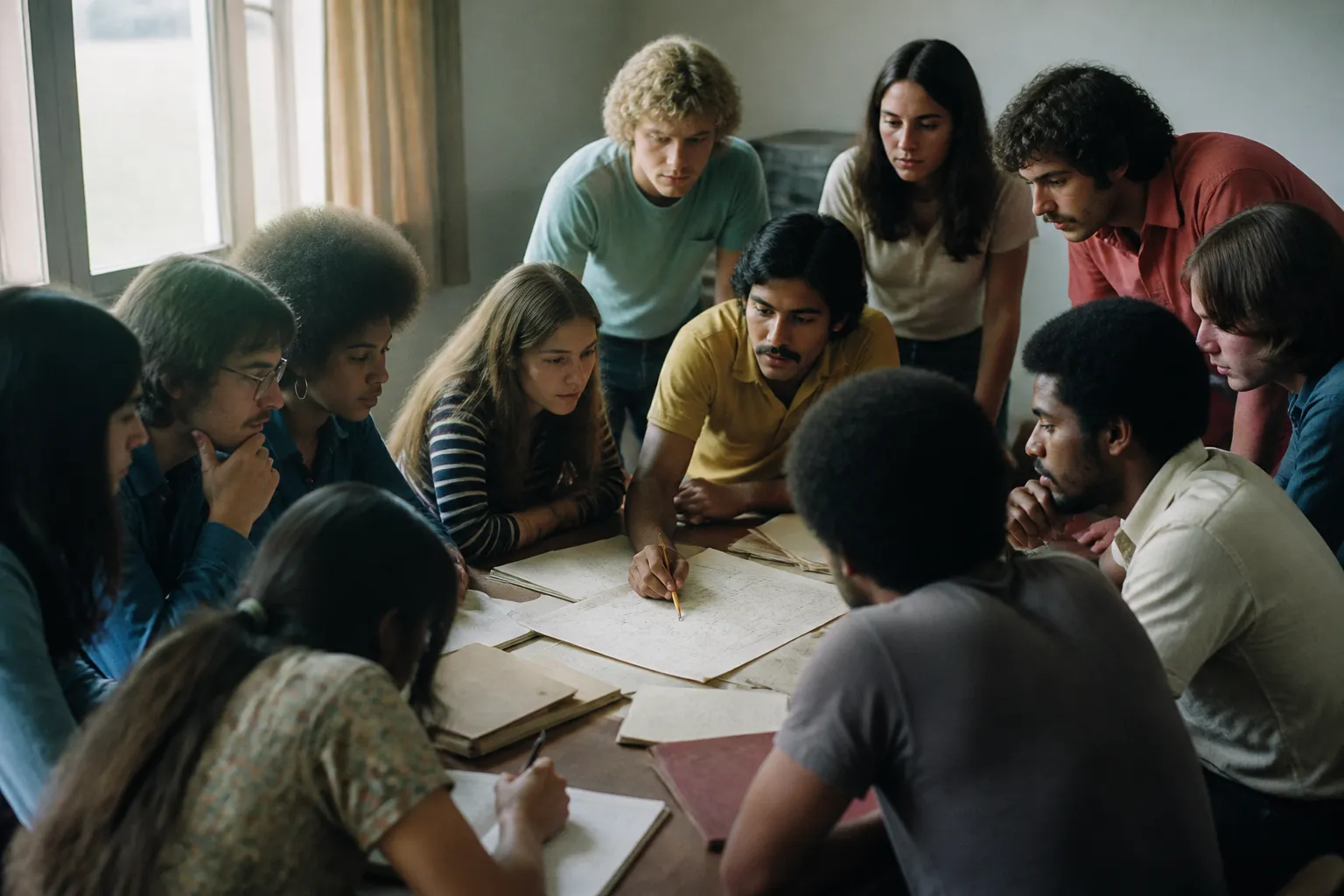
According to Houston Community Services, the story starts in 1974 when 12 University of Houston students talked about the problems facing Houston’s Hispanic community, most of whom lived in the East End. Their answer was not to build a lofty institution that hovered above the neighborhood. They decided the community needed a place that could inform and educate people, a community center that would act as a clearinghouse for help and information. The organization says it was incorporated in 1975 with that mission in view.
That origin still feels unusually sharp. Plenty of nonprofits are born from compassion. Fewer are born from the very specific realization that information itself is a public need. In a neighborhood as storied as the East End, that is block-by-block thinking. Harrisburg Boulevard is full of places where people handle the mechanics of life, from errands and papers to money, school decisions, and family obligations. Houston Community Services fits that rhythm instead of pretending to float above it.
What I like about that sentence is the order: inform, educate, enrich, and support. It recognizes that culture and economic stability do not live apart from administration; they move through it.
A citizenship application, a tax filing, a consultation in the right language—those are cultural survival tools too.
Forms, taxes, and notary stamps as neighborhood infrastructure
Get the weekly digest
New stories, new nonprofits, every Tuesday morning.
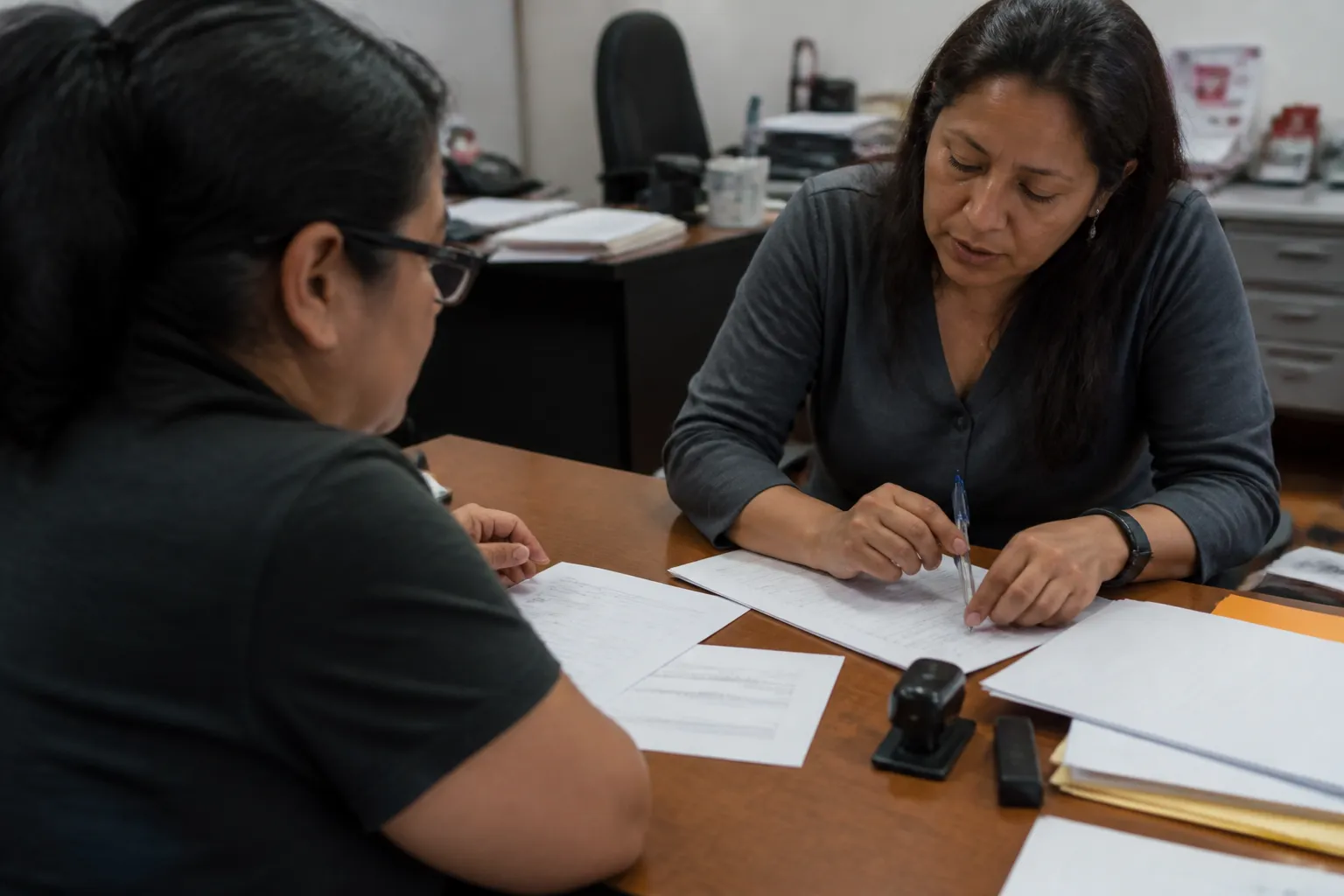
The immigration work is especially telling. Houston Community Services says it assists with forms and related USCIS applications including citizenship, derivative citizenship, DACA, and employment authorization. Put that next to consultations and notary services, and you get a much clearer picture of what the organization actually does for a household. The work is navigation through forms, USCIS applications, and notary requirements.
This is also where the East End location matters. There is something reassuring about a place with an actual front door at 5115 Harrisburg Blvd, weekday hours, and services available in English and Spanish. In a city that loves to stretch everything—commutes, wait times, bureaucratic headaches—that kind of proximity counts. So does predictability.
According to the platform’s IRS data, Houston Community Services reported $126K in revenue, $127K in expenses, and $89K in assets. I do not read those numbers as a reason to think small about the work. I read them as proof that neighborhood institutions do not need to be enormous to be essential. A compact operation can still become the place people know to call when a tax season, an application packet, or a notary requirement lands at the worst possible moment.
The most revealing detail may be that the center publishes instructions: what to bring, what forms are relevant, how to prepare. That is such a local, unflashy kind of respect. It says the organization is making the process legible instead of mystifying it.
The scholarship is the payoff
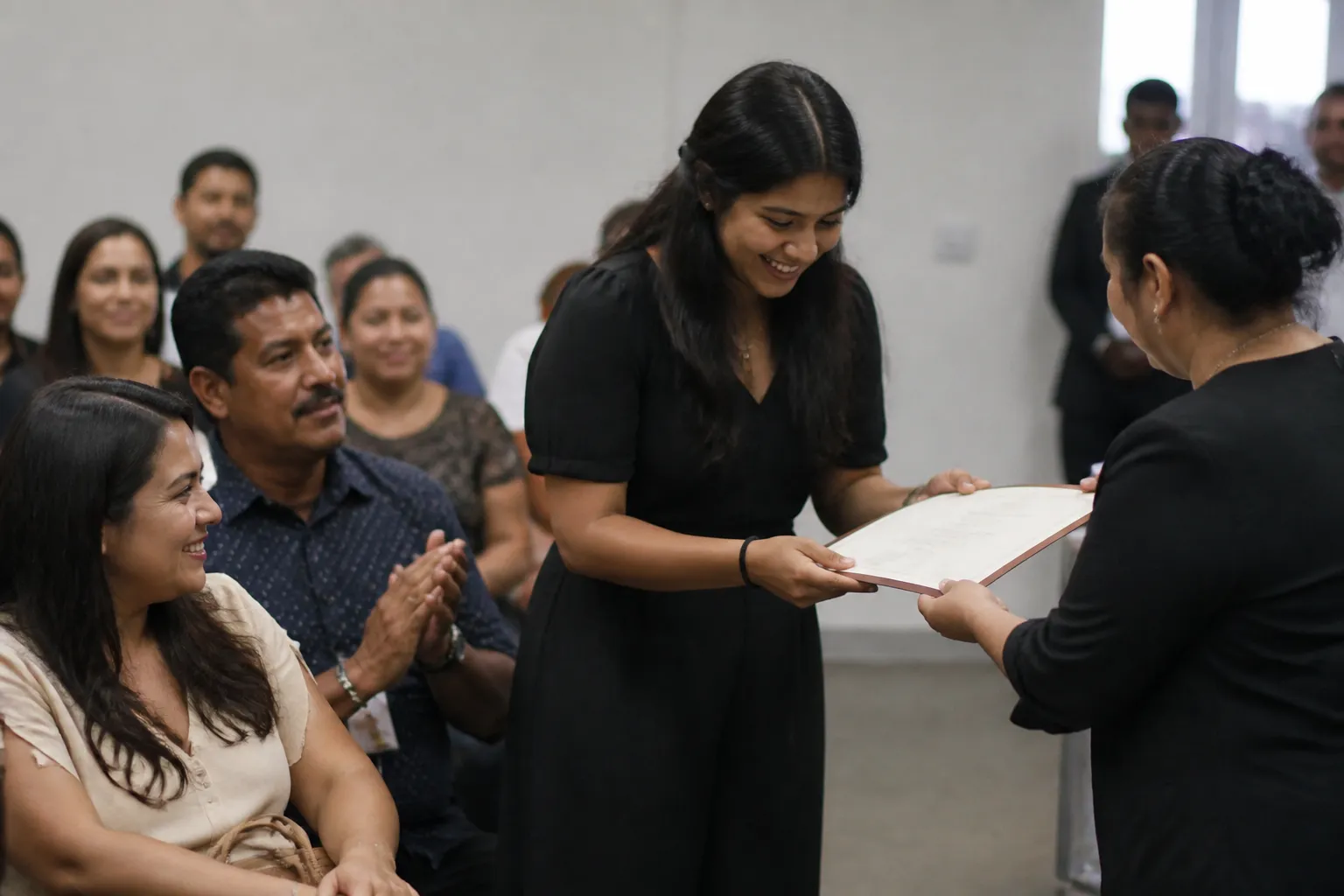
Then the paperwork story opens into a future.
Houston Community Services says the Azteca Scholarship began as one of its projects in 1985 and awards scholarships annually to Houston-area high school seniors planning to attend college or university. I love that this sits under the same roof as tax prep and immigration help. It means the organization helps families manage the present tense and stays around for the next set of forms: the application, the eligibility instructions, and the leap into college.
A few public details make that continuity feel real. According to the organization’s scholarship pages, an award was presented to Eduardo Alvarado in 2017, and the 2019 page listed four recipients. Those are small numbers only if you think in press-release scale. In neighborhood scale, they are four students, four families, four futures with a little more room around them.
And this is not paperwork stripped of culture and community life. Houston Community Services pairs social services with cultural enrichment in its mission, and its pages also note a free Halloween Carnival in 2019 with games, prizes, and treats for local families. In 2017, according to the organization, COCIMH presented Centro Aztlan with a tapestry for its commitment to the community. That is the East End version of legitimacy: the block knows who has shown up.
There is a temptation in philanthropy to chase the shiny part of need. Houston Community Services has spent decades making the opposite case on Harrisburg. The stamp, the checklist, the consultation, the scholarship instructions—this is where trust gets built.
If you want to help, put your money toward the Azteca Scholarship. It is the cleanest way to back a place that has understood since 1974 that sometimes the document on the desk is the difference between getting stuck and getting on with your life.
Frequently asked questions
- What services does Houston Community Services offer in Houston?
- Houston Community Services says it offers immigration services, income tax preparation, consultations through Centro Aztlan, notary public services, and the Azteca Scholarship for Houston-area students.
- Does Houston Community Services help with immigration paperwork?
- Yes. According to the organization, it assists with immigration forms and related USCIS applications including citizenship, derivative citizenship, DACA, and employment authorization.
- Where is Centro Aztlan located?
- Centro Aztlan is located at 5115 Harrisburg Blvd in Houston’s East End. The organization says people can visit during Monday through Friday hours or contact it by phone at 713-926-8771 or by email.
- What is the Azteca Scholarship?
- Houston Community Services says the Azteca Scholarship began in 1985 and awards scholarships annually to Houston-area high school seniors planning to attend college or a university. Its 2019 scholarship page listed four recipients.
- How can I support Houston Community Services?
- The clearest current need listed by the organization is donations toward the Azteca Scholarship. It also notes volunteer support for the Halloween type Carnival.
- houstoncommunityservices.com ↗
- Houston Community Services was founded in 1974 by 12 University of Houston students who were discussing problems facing Houston’s Hispanic community.
- The organization’s stated mission is to serve as a social service center that informs and educates the Hispanic community, promotes cultural enrichment, and supports economic development.
- Through Centro Aztlan, Houston Community Services provides assistance with immigration forms and related USCIS applications, income-tax preparation, and consultations.
- The Azteca Scholarship was initiated in 1985 as a project of Houston Community Services; the organization’s website lists scholarship recipients for 2018 and 2019.
- Houston Community Services is centered in Houston’s East End and serves primarily Hispanic residents in the East End and the wider Houston metropolitan area.