
If You Want More Trees in Dallas, Start With These 3 Groups
If you want more trees in Dallas, look beyond planting days. These three groups map the work of local tree giving. They preserve habitat at Cedar Ridge, reclaim damaged Trinity River land, or protect living history one significant tree at a time.
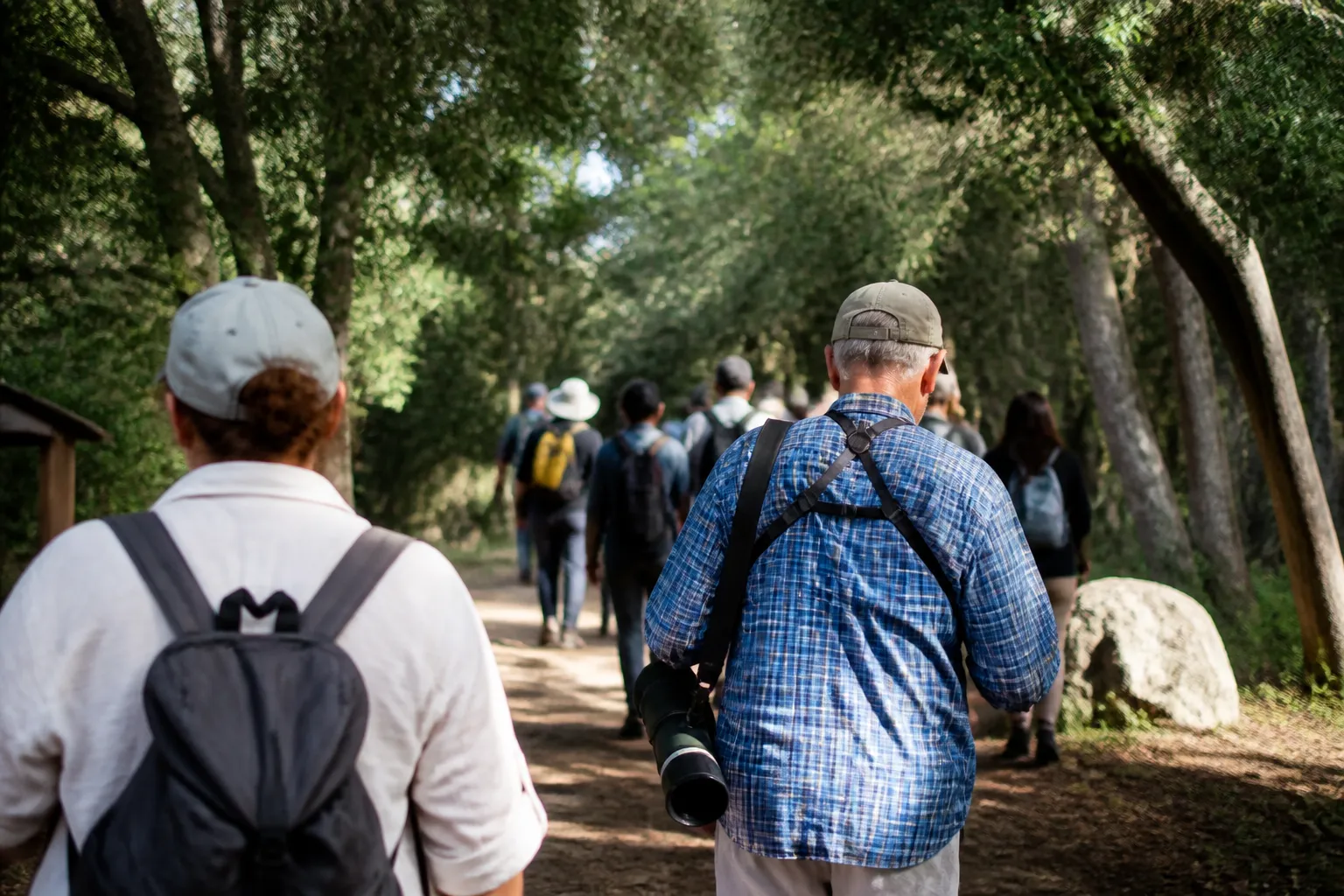
If your idea of supporting trees in Dallas is a planting day, a shovel, and a cheerful group photo, you are aiming too low. The better tree story starts at Cedar Ridge Preserve, where Dallas County Audubon Society manages 633 acres of habitat and hosts about 500,000 visitors every year. Cedar Ridge is a piece of Dallas public life with roots.
Type tree planting nonprofits in Dallas TX into a search bar and you’ll get the usual blur of volunteers holding saplings, but the best Dallas tree groups do more than plant; some restore habitat, and some protect older trees. Decide what job you want your tree dollar to do. Keep a major preserve healthy and open. Reclaim Trinity River land buried under debris. Or protect old trees by proving why they matter before somebody forgets.
Those are three different kinds of work, and Dallas has a strong option for each. The map runs from Cedar Ridge to Irving to Wylie, and each stop asks for something different.
For tree planting nonprofits in Dallas TX, Cedar Ridge is the best answer
The cleanest case is Dallas County Audubon Society. If you want to fund tree work you can verify with your own legs, this is it. The organization has managed Cedar Ridge Preserve since 2003, and the preserve is the sort of place that resets your sense of scale in a hurry. It covers 633 acres of trails, native prairies, woodlands, butterfly gardens, and bird habitat, hosting about 500,000 visitors a year.
That visitor number is the part I can’t get over. Half a million people is not niche. It means the stewardship here is doing double duty every season. The preserve protects habitat and gives Dallas something harder to replace than a program statistic. Visitors get a place where they can go outside and mean it.
A preserve survives because people use it, yes, but also because they learn how to value it.
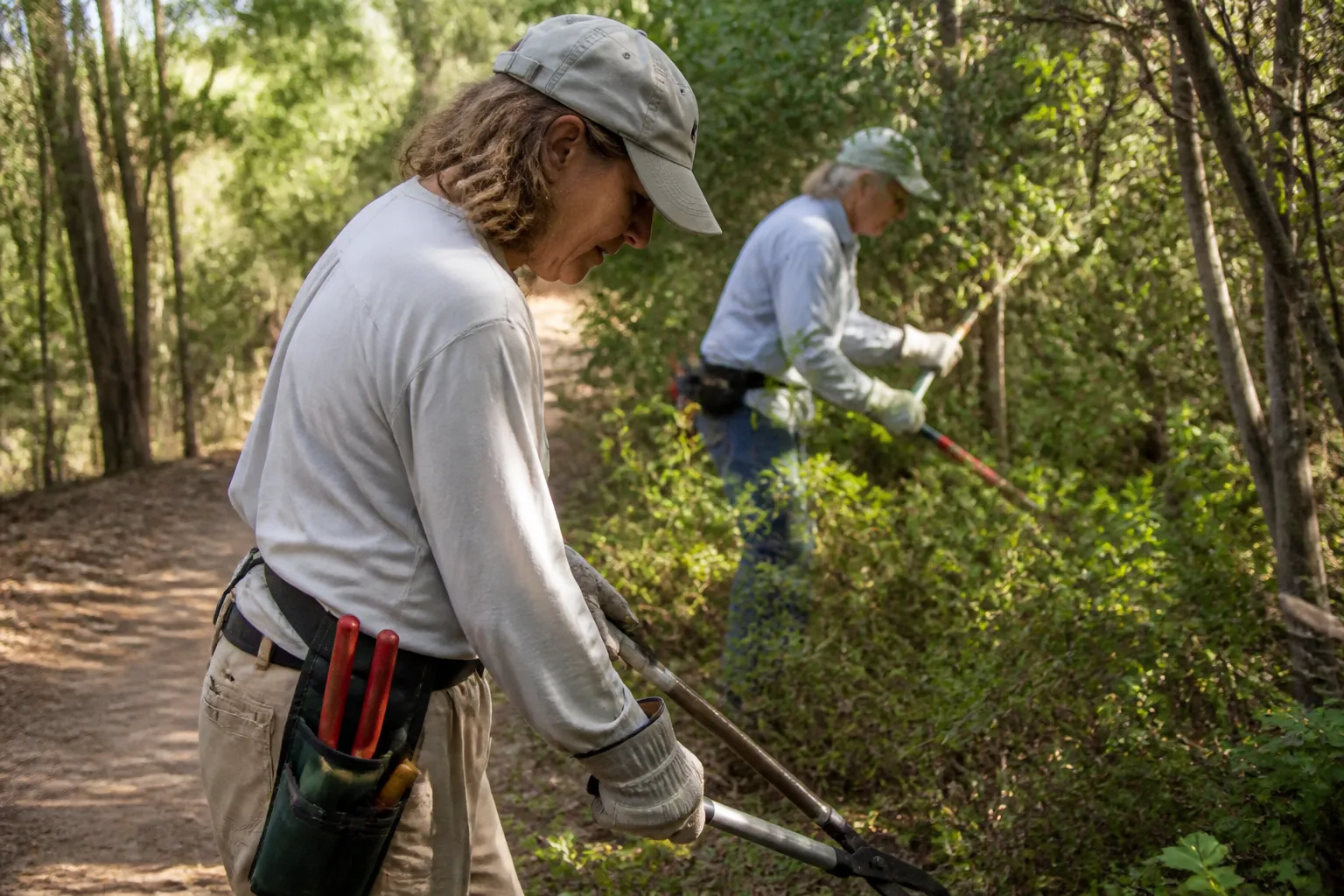
On the calendar, stewardship here shows up as Conservation-in-Action Workdays on the first and third Saturdays, habitat restoration projects, and educational programs that teach children and adults how to read a landscape instead of just passing through it.
Founded in 1973, Dallas County Audubon Society is volunteer-run, with 3 staff and 150 volunteers, and that ratio tells you a lot about the work's boots-on-the-ground character. The group runs birding field trips, citizen-science counts, educational programs for kids and adults, and habitat restoration projects, but Cedar Ridge is the center of gravity. Donations help maintain hiking trails, restore native ecosystems, and keep the preserve usable for the community that already shows up.
There is also a quietly ambitious next chapter here. In 2025, the organization purchased a 60-acre tract west of Cedar Ridge Preserve for the Songbird Sanctuary, planned to open in 2026. That is the kind of move I like in a local conservation group. More land matters more than louder messaging.
If your version of generosity is practical, this is the pick. You are not funding an abstract love of trees. You are helping keep a specific landscape usable to the next person who needs a trail more than another errand.
On the Trinity, the job starts with trash
Greenspace Dallas is for donors who understand a less photogenic truth. In the Trinity River Corridor, restoration often begins long before planting. First somebody has to pull out the mess.
The organization, founded in 2004 and based in Irving, tackles those conditions directly.
Trees thrive after somebody removes the toxic trash, the dumped tires, the debris, the invasive species, and the long municipal shrug that let a place slide in the first place.
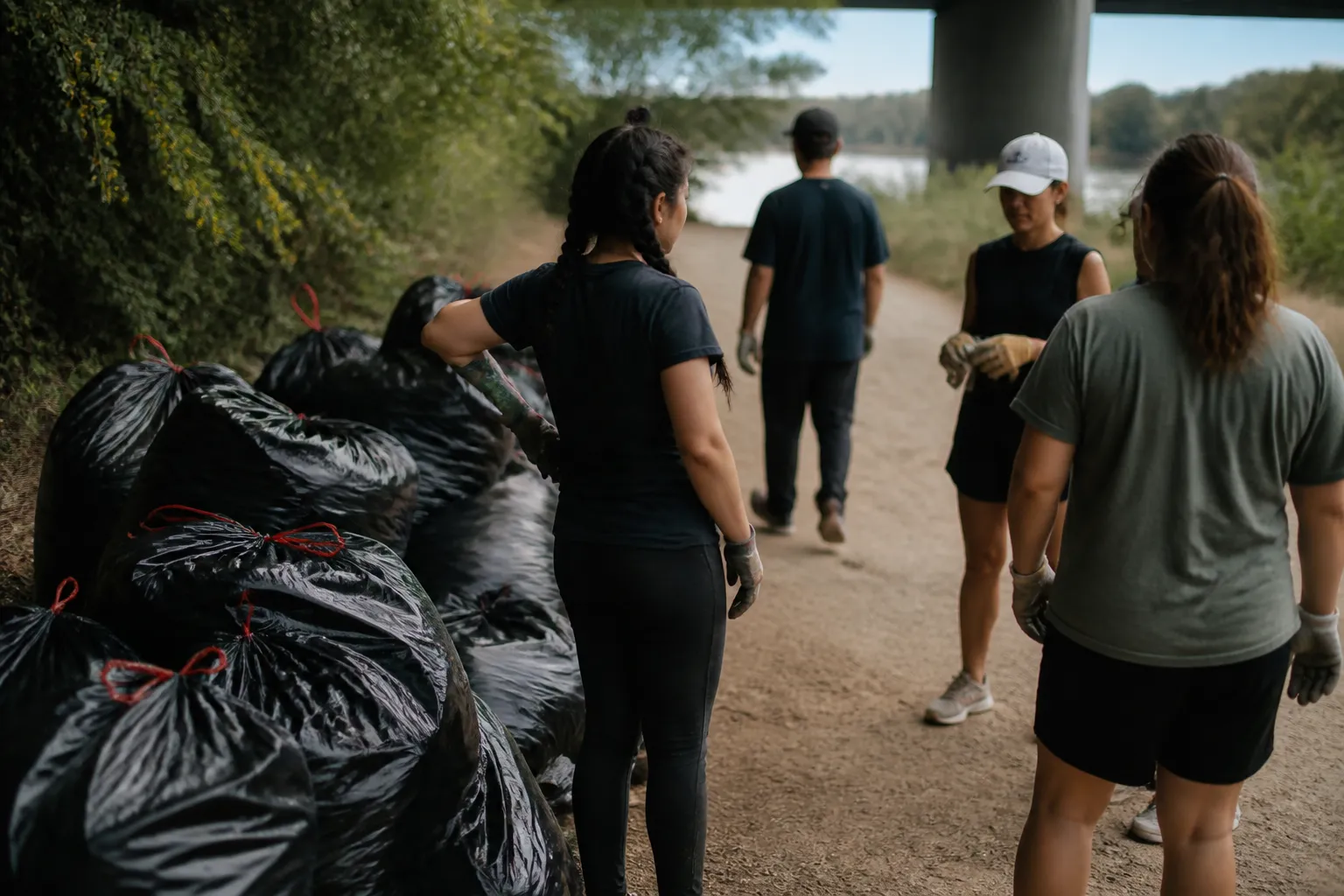
Greenspace Dallas has been doing that since its early work at Hines Park, the transformation of the 110-acre Frasier Dam Recreation Area from a former illegal dumping ground into an urban forest, and its role in reclaiming the L.B. Houston Nature Trails in 2013. Read that sentence again and notice what is missing. There is no romance in this practical effort; the work relies on contractor bags, trail tools, raised tread surfaces, docks, benches and a Saturday morning calendar.
Get the weekly digest
New stories, new nonprofits, every Tuesday morning.
It also refuses the false choice between public access and ecological repair. Greenspace Dallas funds raised tread surfaces, viewing decks, benches, picnic areas, and kiosks alongside wetland and prairie restoration, a smart Dallas mix because people protect places they can actually enter.
The numbers from 2024 are gloriously blunt. Greenspace Dallas logged 983 volunteers and 4,320 volunteer hours. It removed 32,335 pounds of toxic trash. It filled 1,616 contractor-grade garbage bags. Over time, it has cleared more than 1 million pounds of dumped material from urban urban green spaces. If you have ever looked at a trashed creek edge and wondered whether volunteerism is too small a tool for a problem that ugly, there is your answer.
Ellie was a 2023 member of the Trinity River Crew, Greenspace Dallas’s paid summer conservation program for high-potential youth from historically marginalized areas. She described the experience this way: “TRC was an eye opening experience. While I was never the type of person to enjoy conservation and exploring the outdoors, being with TRC really changed my…”
Yes, the quote trails off in the source material. The quote captures a young person beginning to see herself in conservation. That is the kind of local environmental work I trust because the land gets healthier, and the circle of people who feel ownership over it gets bigger.
Most people looking for tree charities picture planting days. Greenspace Dallas takes a broader approach, restoring the conditions that let trees and public spaces survive together. If that is your lane, the path in is easy. Options include weekly Saturday public cleanups, monthly Social Saturdays, corporate volunteer groups, and funding for trail trail work and youth conservation programs.
Some trees need historians as much as water

Based in Wylie, Dallas Historic Tree Coalition began in 1995 and grew into the Texas Historic Tree Coalition in 2014. It remains an all-volunteer nonprofit, and its mission is crisp and unusually serious: “Dedicated to finding, researching, recognizing, preserving, and celebrating significant trees in Texas.”
This is tree work for people who believe memory is part of the canopy.
A city loses trees to storms, neglect, and amnesia. The live oak, the magnolia, and the odd survivor at the edge of a property line become harder to protect when nobody documents what they are, where they stand, and why they matter. That is what makes this coalition so much more interesting than its modest public profile suggests. The coalition turns appreciation for nature into evidence.
That evidence is concrete. It includes historic and heritage tree nominations, Indian marker tree nominations, photos, location details, supporting material from credible sources, and property owner permission when needed. The organization also publishes The Texas Tree Advocacy Workbook, a practical resource for people trying to organize around trees in crisis situations. This is the paperwork end of preservation, and I mean that as a compliment. Sentiment matters less than documentation, which gets results.
And the coalition is not winging it from sentiment. Its own materials emphasize the best information available from historians, arborists, archaeologists, anthropologists, environmentalists, and others. A tree seeking recognition needs a credible case, and this group wants receipts.
“We feel that we have a moral obligation to find, celebrate and document these living legacies for future generations to enjoy.” — Dallas Historic Tree Coalition
I like this group because it treats old trees as cultural assets with a case file, the way Dallas too often treats buildings. If there is a tree you point out every time you pass it, the one your family uses as a landmark or the one neighbors swear has been there longer than the street around it, this is where affection can become action.
From Cedar Ridge to the Trinity River Corridor to Wylie, the point is specificity. Dallas County Audubon Society keeps a major preserve alive for the people and wildlife already using it. Greenspace Dallas does the debris-heavy, trail-building, wetland-restoring work the Trinity River Corridor actually requires. Dallas Historic Tree Coalition protects the stories embedded in older trees before those stories get paved over or forgotten.
So don’t give to trees in the abstract this month. Choose the version of Dallas tree work you actually mean, whether Cedar Ridge stewardship, Trinity River restoration, or historic-tree documentation, and back that specific job with your money or your Saturday.
Frequently asked questions
- What are the best tree-focused nonprofits to support in Dallas?
- This guide highlights three local options. Dallas County Audubon Society covers Cedar Ridge Preserve stewardship, Greenspace Dallas covers Trinity River Corridor restoration, and Dallas Historic Tree Coalition covers historic-tree research and recognition.
- Which nonprofit manages Cedar Ridge Preserve?
- Dallas County Audubon Society manages the 633-acre Cedar Ridge Preserve and has handled the preserve’s management and education responsibilities since 2003.
- Are there Dallas groups that do more than plant trees?
- Greenspace Dallas focuses on cleanup and restoration work, including trails and wetlands, in the Trinity River Corridor; Dallas County Audubon Society manages habitat and trails at Cedar Ridge; and Dallas Historic Tree Coalition documents and advocates for significant trees.
- How can I volunteer with a Dallas tree nonprofit?
- Greenspace Dallas runs weekly Saturday public cleanups and monthly Social Saturdays. Dallas County Audubon Society offers Conservation-in-Action Workdays on the first and third Saturdays of the month at Cedar Ridge Preserve.
- Can I nominate a historic tree in Dallas?
- Dallas Historic Tree Coalition accepts historic and heritage tree nominations as well as potential Indian marker tree nominations, with photos and supporting details requested and property owner permission needed in some cases.
- audubondallas.org ↗
- Dallas County Audubon Society manages the 633-acre Cedar Ridge Preserve, which the organization describes as receiving about 500,000 visitors annually.
- In 2025, Dallas County Audubon Society purchased a 60-acre tract west of Cedar Ridge Preserve for the Songbird Sanctuary.
- greenspacedallas.org ↗
- Greenspace Dallas’s 2024 impact reporting lists 983 volunteers, 4,320 volunteer hours, and 32,335 pounds of toxic trash removed.
- Greenspace Dallas operates the Trinity River Crew, a paid summer conservation program for young people, and the program was named one of six 2020 Conservation Wranglers by Texan by Nature.
- txhtc.org ↗
- The organization now known as the Texas Historic Tree Coalition began in 1995 as the Dallas Historic Tree Coalition and expanded its name and scope statewide in 2014.
- txhtc.org ↗
- “Dedicated to finding, researching, recognizing, preserving, and celebrating significant trees in Texas.” — Texas Historic Tree Coalition